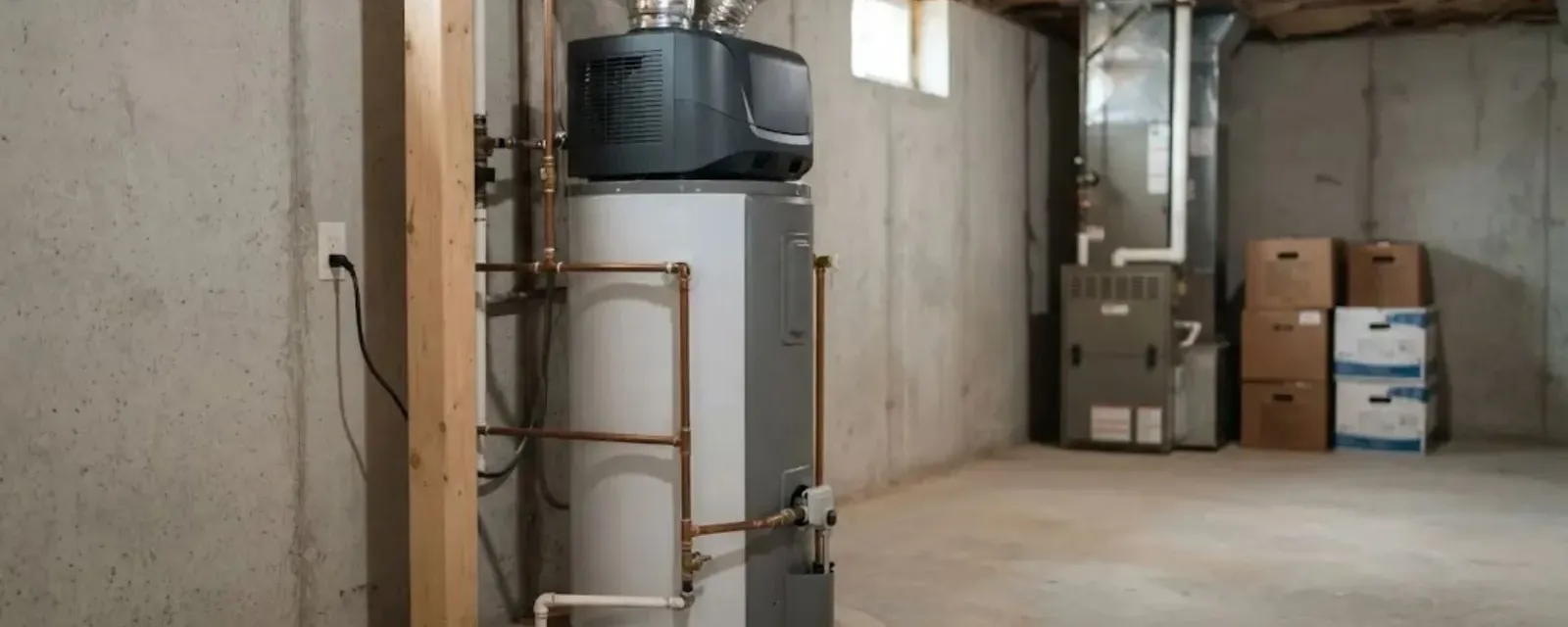
Water Heater Installation in Cheltenham, PA
24/7 Emergency Line OpenPlanned water heater installation in Cheltenham, PA is easier and usually cheaper than a flooded-basement scramble. We handle upgrades, relocations and first-time installs for homes, additions and finished basements, with clear pricing before work starts and same-day appointments when available.
Installation is more than setting a tank in place. Venting, relief lines, expansion control and shut-off valves decide whether the heater runs safely for the next decade.
Planning an install: what we confirm first
Before any work, we confirm the fuel source, the tank size, the vent path and where the unit will live. These four answers set the scope, and they are cheaper to confirm in a quick call than to discover with the old tank half drained.
| Question | Why it matters | What we check |
|---|---|---|
| Fuel and supply | Gas and electric need different connections | Gas line size, shut-off, and panel capacity for electric |
| Tank or tankless | Different space, venting and flow needs | Household demand and available space |
| Vent path | Exhaust must leave safely | Flue condition, clearances and termination |
| Location | Leaks must have somewhere safe to go | Drain access, pan options and floor condition |
| Water pressure | High pressure shortens tank life | A pressure test and a regulator check |
Expansion tanks, relief valves, and why they matter
When a heater warms water in a closed plumbing system, the water has nowhere to expand. Pressure rises, and the relief valve starts to weep or the tank fittings suffer. An expansion tank gives that pressure somewhere to go.
A relief valve with a properly routed discharge pipe is the heater's last safety layer. We install it with a line that ends in a visible, safe location, not capped, and we test it before we leave.
If an existing unit has been dripping from the valve, a repair visit may fix the trigger instead of the valve alone.
A storage water heater must have a temperature and pressure relief valve, and the International Plumbing Code (IPC) calls for its discharge pipe to run to a safe point. Gas units also follow NFPA 54, the National Fuel Gas Code. Walk the finished install with the plumber and look for both.
Ready to schedule an install?
Tell us the fuel, tank size and location. We schedule same-day when available.
Moving or adding a heater
Relocations come up during basement finishing, additions and kitchen or bath remodels. Moving a heater changes the vent length, the gas run, the electrical circuit and the position of the drain, so each of those is reviewed.
A move can also open the door to a better layout, such as a heater closer to the main bathroom to cut the wait for hot water. Where new fixtures or pipe runs are part of a remodel, our plumbing installation service covers the rough-in.
Installation in Cheltenham's older houses
Cheltenham Township's housing stock is old, much of it dating from the early twentieth century, and the character homes in Elkins Park and Wyncote often have utility rooms that were never designed for a modern heater. Chimney flues, narrow doorways and low headroom are common.
That does not stop an installation. It changes the plan, from the choice of tank height to the way the vent is run. We walk the path from the stairs to the final location so the delivery matches the room.
What shapes the cost of an installation
- EquipmentTank size, fuel type, efficiency and any tankless or hybrid choice are the largest drivers.
- Venting workA new flue liner or direct vent kit adds materials and labor.
- Supply modificationsGas line or circuit upgrades go beyond a straight swap.
- Site conditionsTight access, stairs and long pipe runs add time.
- SchedulingPlanned daytime installs cost less than rush work after hours.
You get a clear price before work starts. Installation is a planned expense, so insurance does not usually cover it, though a policy may help if water damage forces an early replacement. Call (215) 714-6692 for your quote.
Permits, inspections and paperwork
Permit rules vary by project, so ask the Cheltenham Township building department at 215-887-1000 before you schedule. For properties in the Abington Township sections of Elkins Park or Glenside, call Abington Township at 267-536-1000. Ask the building department what paperwork applies to your address before work starts.
Frequently asked questions
A straight tank swap usually takes part of a day. Moves, fuel changes and venting repairs take longer. We give you a realistic window when we schedule.
Often yes. We review clearance, venting and drainage first. A drain pan with a piped drain can protect finished space from future leaks.
Size depends on the number of people, the number of bathrooms and how many hot water uses overlap in the morning. Tell us your household and we will recommend a size, not simply copy the old one.
Permit rules vary, so ask the Cheltenham Township building department at 215-887-1000 or Abington Township at 267-536-1000 if your property sits on that side of the line.
It is a small pressurized tank that absorbs the extra volume when water heats. Homes with a check valve or pressure reducing valve at the meter usually need one. We test the system and tell you.
Yes, where the room has air space, enough clearance and a drain for condensate. We confirm those conditions and the electrical supply before ordering the unit.
Planning a new water heater?
Call (215) 714-6692 and we will walk through the options.