Emergency Drain Cleaning in Cheltenham, PA
24/7 Emergency Line OpenA drain that has stopped completely, a toilet that gurgles when the washer drains, or water rising in a basement floor drain all need attention today, not next week.
Our dispatch line for emergency drain cleaning in Cheltenham, PA is open 24/7, including nights, weekends and holidays. While you wait, stop running water in the house, keep the lid closed on anything that is backing up, and keep children and pets out of any standing water.
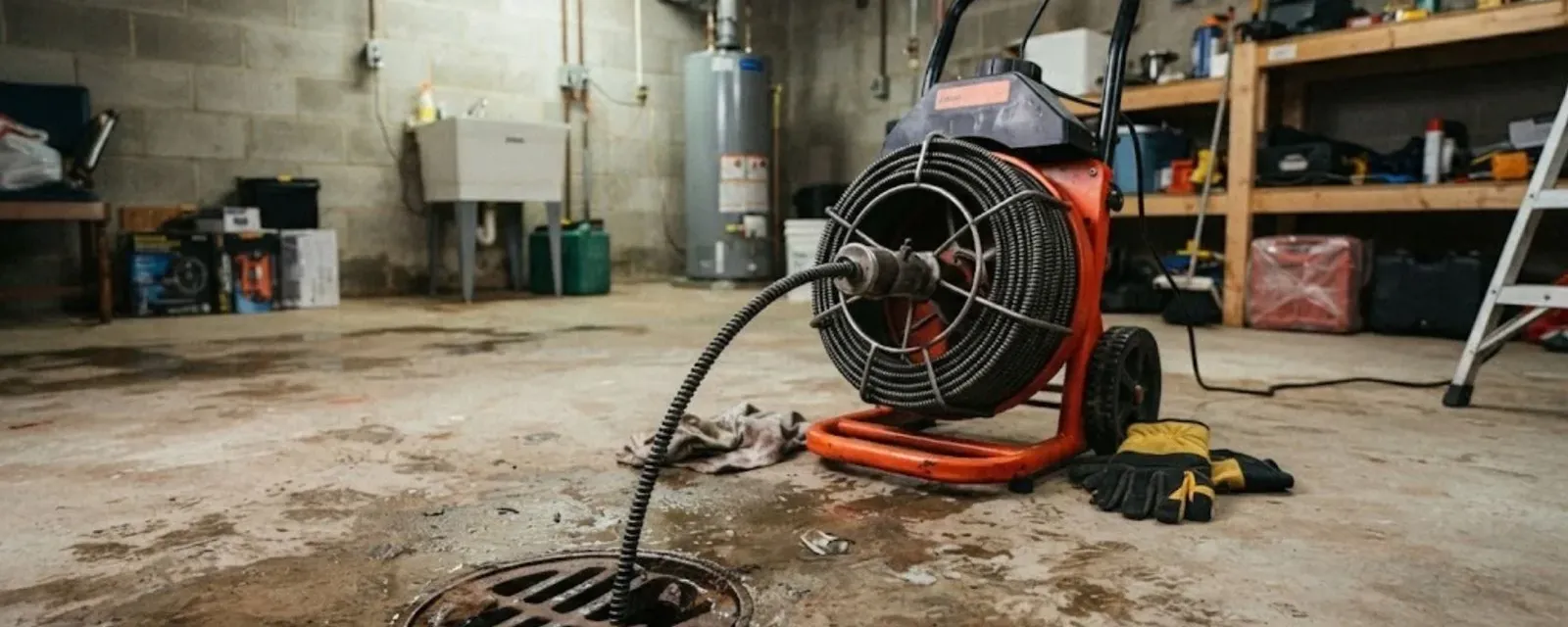
Drain cleaning means clearing the blockage and then proving the line is open, usually with a cable machine for soft clogs and a camera when the cause is unclear. We tell you what we found before any extra work begins.
When a clogged drain is an emergency
Not every slow drain needs a midnight call. A bathroom sink that drains over thirty seconds can usually wait for a morning visit. Three situations cannot wait: sewage coming up through a floor drain or tub, more than one fixture backing up at once, and a kitchen line that has stopped with a full dishwasher cycle still to drain.
Multiple fixtures failing together points past the branch line to the main drain. At that point every flush and every load of laundry adds to the problem. Shut off the dishwasher and washing machine, and ask everyone in the house to hold off on showers until the line is cleared.
Do not pour chemicals into a backed-up drain
Liquid drain openers sit in the pipe and burn skin if they splash back during snaking. A plumber working on a line full of caustic water has to treat it as a hazard. Tell the dispatcher if you already used one so the right gloves and eye protection come along.
Clogged drain symptoms and what each one usually means
The first sign of trouble is rarely a full stoppage. Slow drains, gurgles and odors each point to a different part of the system, and knowing which one you have shortens the repair.
| What you notice | Where the clog usually sits | How we clear it |
|---|---|---|
| One sink drains slowly | In the trap or the first few feet of branch line | Hand auger or small cable, then flush |
| Kitchen sink and dishwasher both back up | Kitchen branch, often grease packed beyond the trap | Cable machine with a cutting head |
| Toilet gurgles when a tub drains | Shared branch or the main drain | Closet auger first, then main-line cable |
| Water pools around a basement floor drain | Main drain or lateral toward the street | Large cable, camera check, then jetting if needed |
| Bad smell with no visible clog | Dry trap, vent problem or a cracked pipe | Camera inspection before cleaning |
If the symptom shows up in only one fixture, we start with that fixture's trap and branch. If it shows up in several, the cable goes in through the cleanout where the main leaves the house.
The International Plumbing Code (IPC) expects accessible cleanouts on a building drain, and that is exactly where a plumber wants to put the cable when the main backs up. If your house has no reachable cleanout, ask for one to be added during the visit, because it shortens every future clearing.
Drain backing up right now?
Stop running water and call. The line is staffed 24/7 and a plumber can be scheduled same day when available.
Kitchen sink clogs in older Cheltenham homes
A kitchen drain is usually a 1-1/2 inch line that runs through a wall or floor to a larger stack. Cooking grease cools inside that small pipe and hardens into a collar that narrows it a little more with every dishwasher cycle. Coffee grounds, eggshells and rice add to it. By the time the sink stops, the clog is often ten feet or more downstream of the trap.
Houses in Cheltenham, Elkins Park and Wyncote that date to the early 1900s often have long horizontal kitchen runs with older iron or galvanized sections, and rough pipe walls hold grease more stubbornly than smooth modern PVC. That is why a quick plunge rarely lasts in these homes and why we run a cable with a cutting head to scrape the walls rather than just poke a hole through the middle.
After the kitchen clears, run hot water for two minutes and ask us to watch the dishwasher discharge. If the drain slows again within a week, the grease is farther downstream and a hydro jetting visit is the better next step.
Snaking, cabling and what each tool does
People use "snaking" for several different jobs. A hand-crank drum auger handles sink and tub traps. A closet auger reaches past the toilet trap without scratching porcelain. A motor-driven cable machine carries 3/8 inch or 5/8 inch cable, with cutting heads sized to the pipe, into a main line.
Cable works well on soft blockages, paper, hair and light root hairs. It does not remove the grease film or scale left on the pipe wall. When a line has been cabled twice in a year, we stop recommending a third cabling and move to a camera look and a jetting plan.
- Hand auger: sinks, tubs, shower drains, and traps up to about 25 feet.
- Closet auger: toilet blockages that sit behind the trap.
- Cable machine: kitchen branches, laundry lines and main drains from a cleanout.
- Camera head: confirms the pipe is clear and shows whether the cause is a crack, offset or root entry.
Clogs that keep coming back
A drain that clogs every few months is telling you something about the pipe, not the household habits. The common causes are a belly (a sag that holds water and debris), tree roots entering at a joint, a cast iron stack with scale narrowing it, or a partial collapse in an old clay lateral.
Cleaning clears the symptom. A camera inspection tells you which of those causes you have. We would rather show you a short video of the pipe than sell you a fourth cleaning, and we will explain whether the answer is jetting, a spot repair through sewer line repair, or no further work.
A slow drain that is really a leaking drain line
Occasionally a slow drain comes with a damp spot on a basement ceiling or a stain under a bathroom. That combination suggests the drain pipe itself has cracked or a joint has opened. Water leaves through the crack while the rest finds its way down slowly.
Cleaning will not fix that. We pinpoint the opening with a camera, open only the section that is leaking, and replace it. Call before the stain spreads into drywall or insulation.
What affects the cost of drain cleaning
No two clogs cost the same, and we do not quote from a phone description alone. A clear price is given once the technician has seen the fixture, the access point and the likely length of line involved.
- AccessA floor cleanout makes a main-line job faster than pulling a toilet to reach the line.
- Line lengthLonger runs need more cable and more time to clear and test.
- Blockage typeSoft paper clogs are quick. Packed grease and roots take cutting heads or jetting.
- Camera workAdding a camera pass to confirm the result takes extra time but removes guesswork.
- After hoursNights, weekends and holidays follow the after-hours scale we state before dispatch.
Most homeowner policies cover sudden water damage from a backup only if you have added sewer backup coverage, and routine cleaning is a maintenance cost. Read your own policy, and photograph standing water before cleanup. Want your real number? Call (215) 714-6692.
Cheltenham rules that touch drain work
Cheltenham Township Code Chapter 238 covers sewers, and one of its older provisions says a contractor who rods or clears a building sewer notifies the township within 48 hours of starting, preferably before.
If roots block your lateral, the same chapter gives the owner 30 days from a township notice to have it cleaned, and cleaning proceeds from the building toward the main. We handle that notice for main-line jobs so you are not caught out.
The code also prohibits letting downspouts, floor drains or hoses feed water into the lateral, and the township can ask you to correct that within 60 days of notice. If we find a downspout tied into your drain during a cleaning, we will tell you, because stormwater in the lateral is one reason lines overload in heavy rain.
While you wait for the plumber
Stop adding water
Pause the dishwasher and washing machine, and ask everyone to skip showers and flushing until the line is open.
Move valuables up
Lift boxes, rugs and electronics off a basement floor near a drain that is backing up.
Stay clear of electrics
If water reaches outlets, a freezer or a panel, do not wade in. Call the 24/7 line and tell the dispatcher.
Photograph it
Take dated photos of standing water before cleanup. Insurers and landlords ask for them.
Keep the main-line cleanout cap area clear so the technician can reach it. If the house has a basement bathroom, close its door to contain any splash.
Frequently asked questions
Yes. The dispatch line runs 24/7, so a backed-up main at 2 a.m. gets the same call-back process as a Tuesday morning one. Same-day appointments are offered when available, and after-hours service follows a rate we state clearly before anyone is sent.
Grease and food film stay on the pipe wall after a quick plunge or a thin auger pass. Cable with a cutting head scrapes the wall, and hydro jetting washes it. If the clog returns anyway, a camera look will show whether a sag or crack is catching debris.
We advise against it on a fully stopped drain. The chemical sits in the pipe, can damage older metal and plastic joints, and is hazardous to the technician. Plunging gently is fine. If you used a cleaner, tell us before we start.
Yes. A floor or wall cleanout is the best access point because the cable goes straight into the main without removing a toilet. If you cannot find yours, we will locate it, and a sewer camera inspection can map the line afterward.
Yes. Tenants can call in an emergency, and we will coordinate with the property manager on authorization and billing. Ask the owner whether the clog is a repair or tenant-caused so the invoice goes to the right party.
A sink clog affects one fixture. A main backup affects the lowest drains first, usually the basement floor drain or a tub, and may bring sewage. Main backups need larger cable and often a camera. See our sewer line cleaning page for that process.
Yes. We dispatch across Cheltenham Township, Elkins Park, Glenside, Wyncote and Jenkintown. Part of Elkins Park and Glenside sits in Abington Township, so a main-line job there may involve Abington's contractor rules instead of Cheltenham's.
Clogged drain in Cheltenham, PA?
Call (215) 714-6692 now. A live dispatcher answers 24 hours a day.