Plumbing Installation in Cheltenham, PA
24/7 Emergency Line OpenPlumbing installation in Cheltenham, PA means adding or moving supply lines, drains, vents and fixtures so a bathroom, kitchen, laundry or addition works the way you planned. We handle planned installs by appointment, with same-day slots when the schedule allows.
Most of our installation calls start in a house that is already old. That shapes everything from where the new drain ties in to how the shutoff valves get replaced.
Remodel rough-in: what happens before the drywall goes up
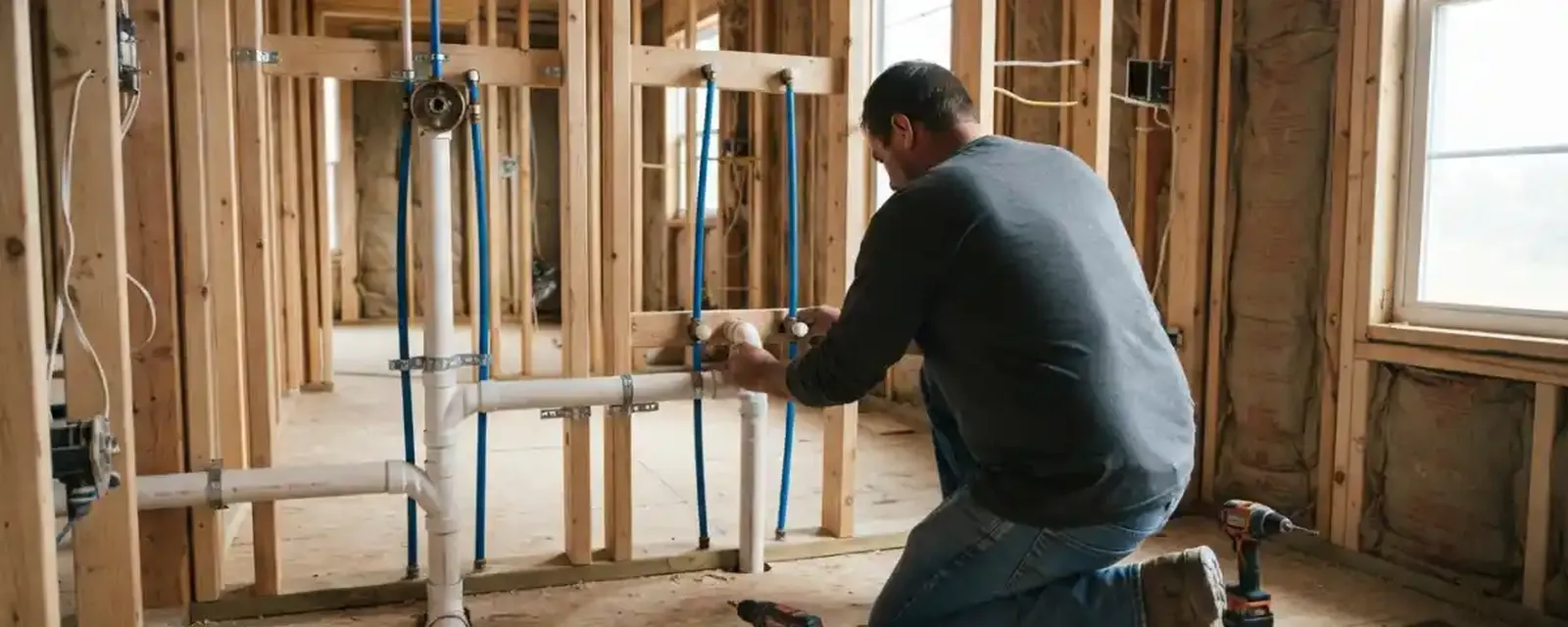
Rough-in is the stage where the pipes are placed inside open walls and floors, before anyone hangs drywall or sets tile. It is the cheapest time to fix a plumbing mistake, because nothing has to be cut out to correct it.
For a bathroom remodel, the rough-in crew sets the drain centerline for the toilet flange, the tub or shower drain, the vanity trap arm and the vent that lets all of them drain without gurgling. Supply stubs for hot and cold go in at heights that match the fixtures you chose, not a generic number.
Before the walls close, the new lines get a pressure test and the drains get a visual check. That test is what protects the new tile from a slow leak that nobody notices for a season.
- Walk the space and confirm where the existing stack, supply main and shutoff valves sit.
- Mark fixture locations against the cabinet and tile plan, including the toilet flange offset from the wall.
- Run the drain and vent lines with the right slope, then rough in the hot and cold supplies.
- Pressure test the supply side and check the drains for flow before the inspector or the drywall crew arrives.
- Set the fixtures after the finish work and test every valve, trap and supply connection.
Older homes change the plan
Cheltenham Township has a long building history. The township's housing stock has stayed largely unchanged since the early 20th century, and Elkins Park and Wyncote still hold large Colonial, Tudor and Queen Anne houses from that era. For an installation, that means we expect to meet a cast iron drain stack, older galvanized or copper supply lines and walls with little room to run new pipe.
The practical effect is simple. A new bathroom added to an old stack often needs a transition fitting where plastic drain pipe meets cast iron, and the new supply branch has to be sized so it does not starve the existing fixtures. We check the existing line first and tell you if the tie-in point is sound before we build on it.
If the supply lines in the house are failing, adding a fixture to them only moves the problem. In that case the better plan is often a partial replacement, which we cover on the repiping page.
Planning a remodel or addition?
Call and walk dispatch through the project. Same-day appointments are offered when available.
Project planner: what each job involves
| Project | What gets installed | Decision to make first |
|---|---|---|
| New bathroom or half bath | Drain, vent, supply stubs, toilet flange, shower or tub valve | Where the new drain meets the existing stack |
| Kitchen remodel | Sink drain and trap, dishwasher supply and drain, disposal hookup, shutoff valves | Island sink or wall sink, and whether a vent can reach the roof or an air admittance valve is allowed |
| Laundry relocation | Standpipe, trap, supply valves, floor drain if needed | Distance from the stack and a drain pan if the laundry sits over finished space |
| Basement bathroom | Ejector or sewage pump system, vent, supply, backwater protection | Whether the drain can reach the sewer by gravity |
| Fixture swap | Toilet, faucet, vanity, shower trim, new angle stops | Whether the old shutoff valves still close |
A fixture swap looks like the simplest job on the list, yet it is where old shutoff valves fail most often. If a valve will not close fully, we replace it during the visit so the next repair is easier.
New construction and additions
For an addition or a new build, the work starts with a drain, waste and vent layout and a water service plan that meets the Pennsylvania Uniform Construction Code as the township enforces it. We work from your plans, rough in the underground and in-wall pipe in stages, and coordinate the inspections with your builder.
New work still has to connect to something that exists. On an addition, that is the water service, the sewer lateral and the existing waste stack. For lateral questions, the township code in Chapter 238 says contractors repairing or replacing a building sewer need a plumbing permit first, so we confirm the permit path before digging.
If your project crosses into the Abington Township side of Elkins Park or Glenside, the permit office changes. Abington requires every contractor working there to register with the township, and its main line is 267-536-1000.
Water lines, shutoffs and pressure on the supply side
A good installation includes the parts nobody photographs. Every fixture gets its own stop valve, the main shutoff should turn freely, and a pressure reducing valve protects new fixtures if the street pressure runs high.
Low water pressure after a remodel usually points to a restriction upstream, such as a partly closed valve or a corroded section feeding the new branch. We test static and running pressure before we design a new branch, which keeps a new shower from pulling the kitchen faucet to a trickle.
- Main shutoff exercised and replaced if it will not close
- Individual stop valves on every sink, toilet and appliance
- Pressure tested before walls are closed
- Expansion room for thermal changes on closed systems
- Labeled shutoff locations so you can find them in a hurry
Gas: why this page sends you to PECO first
If you smell gas, do not call us first
Leave the building right away. Do not flip switches or use a phone inside. Call PECO at 1-800-841-4141 or 911 from outside.
We do not market gas line work on this page. Gas piping and appliance hookups need their own qualified contractor and a utility inspection, so use the plumbing visit for water and drain work and ask the utility who to call for gas.
What changes the price of an installation
- AccessOpen walls and basements cost less to run pipe through than finished plaster and tile.
- Tie-in conditionA sound cast iron stack accepts a new branch easily. A cracked or heavily scaled stack adds repair work first.
- Fixture selectionWall-hung toilets, freestanding tubs and multi-head showers need more rough-in detail than standard fixtures.
- Pipe materialPEX, copper and drain pipe differ in material and labor, and the choice depends on the house.
- Permits and inspectionsPermit rules vary, so ask the Cheltenham Township building department at 215-887-1000 whether your job needs one.
Clear price before work starts is our standard for installation jobs. Insurance rarely pays for planned installs, because a remodel is a choice and not a sudden loss, so read your own policy before assuming coverage. Want your real number? Call (215) 714-6692 and describe the project.
How to check a plumber before you hire
Cheltenham Township Code Chapter 209 requires plumbing and drainage work to be done under a license, with annual re-registration each December and the contractor's business name and address marked on the truck. You can call the township at 215-887-1000 and ask whether any plumber is registered. That call takes a minute and protects the permit that goes with your job.
For jobs on the Glenside or Elkins Park side that fall in Abington Township, ask that office the same question. You can also read about our service area on the Glenside page, which explains how the township line affects work there.
Frequently asked questions
We handle the plumbing portion: drain, vent and supply rough-in, fixture setting and testing. Your general contractor or you handle tile, cabinets and drywall.
Usually yes, as long as the stack is sound. We inspect the tie-in point first, and if the stack is cracked we tell you before we build on it.
Permit rules vary, so ask the Cheltenham Township building department at 215-887-1000. If the property sits in Abington Township, call 267-536-1000 and ask for the permit process.
Yes. We test every stop valve we touch and replace any that will not close fully, because a stuck valve turns a simple repair into a flood later.
Yes. Property managers can call to schedule fixture replacements and unit upgrades, and we coordinate with tenants on access so the work runs on one visit when possible.
Not on this page. If you smell gas, leave and call PECO at 1-800-841-4141 or 911. For planned gas work, ask the utility who is qualified to do it.
Same-day appointments are offered when the schedule allows. Call (215) 714-6692 and tell dispatch what you need installed.
Ready to schedule your plumbing installation?
Call (215) 714-6692 and get a clear price before work starts.