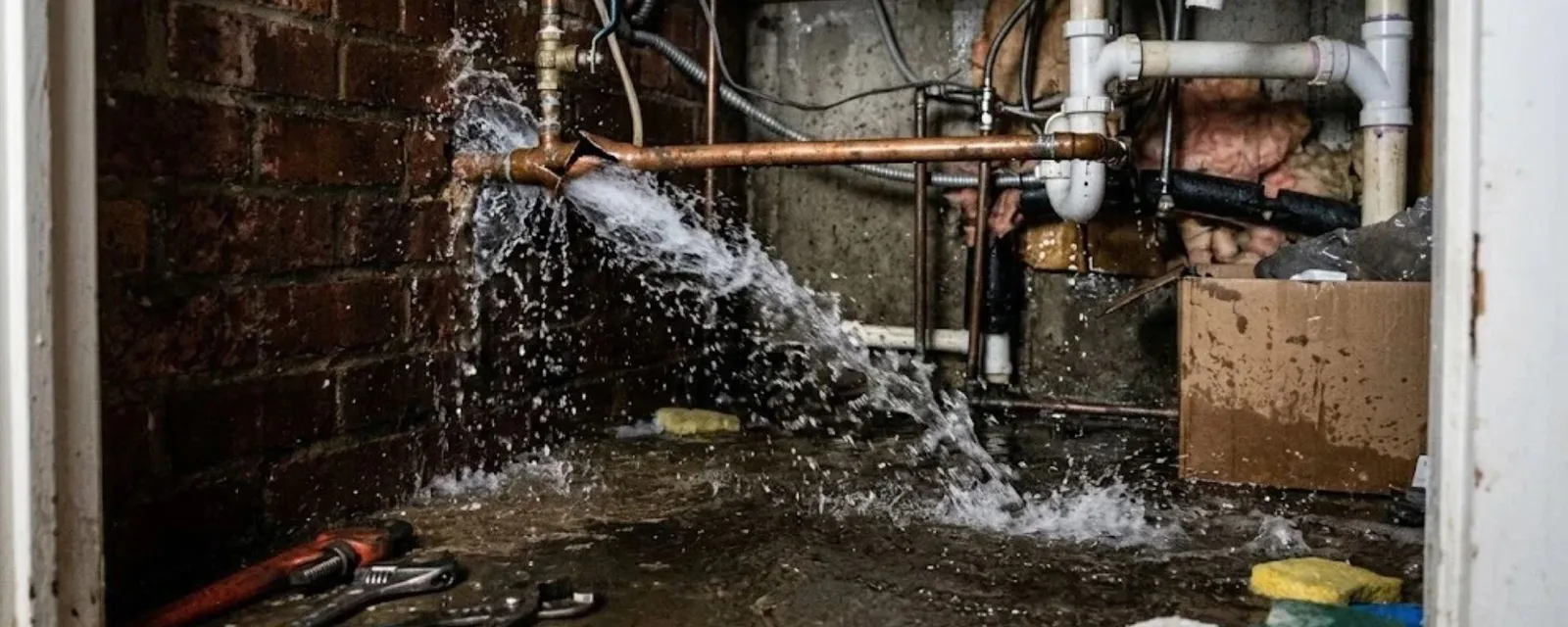
Emergency Burst Pipe Repair in Cheltenham, PA
24/7 Emergency Line OpenA burst pipe in Cheltenham, PA moves fast: a split in a half-inch supply line can put gallons a minute into a ceiling or basement. Our 24/7 dispatch sends a plumber day or night. Until we arrive, close the main water valve, open a low faucet to drain the lines, switch off power to wet rooms if you can do it from dry ground, and keep people out of the water.
When a burst pipe is an emergency
Treat it as an emergency whenever water is flowing that you cannot stop at a fixture. Spraying water, a stream behind a wall, a flooded basement floor or a ceiling dripping steadily all qualify. A frozen pipe that has not split yet also deserves a fast call, because the split often happens during the thaw.
- Find the main shutoff, usually where the water line enters the basement, and turn it clockwise until it stops.
- Open the lowest faucet in the house to relieve pressure and drain the line.
- Turn off the water heater's power or gas control so it does not run dry.
- Switch off breakers for wet areas only if you can reach them without stepping into water.
- Photograph the damage, then call (215) 714-6692 and tell dispatch what material the pipe is if you know.
Do not wait for it to dry out
Water behind plaster or drywall can start to grow mold within a couple of days. We repair the pipe, and we will tell you when a restoration company is the next call. We do not diagnose mold or any health effect.
Why pipes split in older houses
Three forces cause most bursts: freezing, corrosion and pressure. Water expands as it freezes, and the split usually forms just downstream of the ice, where pressure builds. Corrosion thins old steel and copper until a small pinhole becomes a blowout. High street pressure or a failed pressure reducing valve stresses every joint in the house.
Cheltenham's housing stock leans old. The township was settled in 1682, grew with early twentieth century estates and rail lines, and much of its housing has stayed largely unchanged since. That tells us to expect galvanized steel, old copper with brittle solder joints, and cast iron drain pipe behind the walls, all of which fail differently.
Any section of pipe added during a repair should use materials the International Plumbing Code (IPC) approves for water supply, such as copper, PEX or CPVC, with fittings matched to the existing pipe. Ask what is going into the wall before the plumber closes it up.
Safety steps before the plumber arrives
- Close the main water valve, then open the lowest faucet to drain the lines.
- Switch off power to any room with standing water if you can reach the panel without stepping in water.
- Keep children and pets out of the wet area and away from sagging ceilings.
- Move rugs, electronics and paper off the floor, and photograph the damage for your insurer.
- Call (215) 714-6692 and tell the dispatcher where the water stopped.
Water running where it should not be? Call now.
Dispatch can talk you through the shutoff while a plumber heads your way.
How the repair works, material by material
We cut out the damaged section, not just the visible hole. A pipe that has burst is usually weak for a foot or more beyond the split, so the repair extends to sound material.
| Pipe type | How it usually fails | Typical repair |
|---|---|---|
| Copper | Freeze split, pinholes, failed solder joint | Cut out section, new copper or press-fit coupling |
| Galvanized steel | Internal rust, thread leaks, narrowing | Replace the run, often with PEX or copper |
| PEX | Freeze split, fitting failure, UV damage | Cut out section, crimp or expansion fitting |
| CPVC | Brittle cracks at fittings | Cut and replace with new fittings |
| Cast iron drain | Cracks, rotted bottom of the pipe | Section replacement with PVC and no-hub couplings |
When the same run has failed twice, we say so and quote repiping as an alternative. A new run costs more once and often less than the third emergency call.
Cracked, broken and leaking pipe: what is different
Not every failure is a dramatic burst. A cracked pipe may weep for weeks, and a broken drain pipe lets waste water into the floor cavity. Each material and location changes the plan.
Copper. Pinholes along a copper run point to corrosion from the inside. One pinhole means cut and replace. Several on the same line mean the copper is thinning everywhere.
Drain pipe. A crack in a drain pipe leaks only when water passes through, so the stain shows up after a shower or a washing machine cycle. We confirm with a camera and a fill test, and our leak detection crew can pinpoint it before any wall is opened.
Supply valves. A broken or seized valve under a sink or behind a toilet can fail without warning. If a shutoff will not close during a crisis, we replace it with a quarter-turn valve so the next emergency is a ten-second fix.
Frozen pipes: thaw, check, repair
Pipes freeze where heat does not reach them: exterior walls, unheated basements and crawlspaces, garages, and runs under kitchen sinks on cold sides of a house. If a faucet gives a trickle or nothing in freezing weather, a frozen section is likely.
Open the faucet so water can move as it thaws, and warm the pipe slowly with a hair dryer or a heating pad. Never use an open flame or a torch, because a hot spot can ignite framing and can split a pipe that was only cracked. If you see frost on the pipe, a bulge or any wet spot, shut off the main and call.
A thawed pipe still has to be inspected. Ice can crack a pipe without leaking until pressure returns, so we check the length of the frozen run and repair splits before the water is turned back on.
After the water stops
- Keep photos and videos of the pipe, the wet areas and any damaged belongings.
- Save the torn-out pipe section if we offer it, since insurers sometimes ask to see it.
- Run fans and a dehumidifier in wet rooms and call a restoration company for wet insulation or drywall.
- Read your policy. Sudden pipe bursts are commonly covered while gradual leaks and wear often are not, but terms differ.
- Landlords and property managers should send us the unit number and an access contact so we can coordinate with the tenant.
What drives the price of a burst pipe repair
- LocationA pipe in an open basement ceiling is simpler than one inside a finished bathroom wall.
- MaterialCopper, PEX and steel need different tools, fittings and time.
- Length of damageA single split is a spot repair. Long stretches of corroded pipe become a section replacement.
- After-hours timingNights and weekends can change how quickly crews are staffed, and your price is explained before work starts.
- Access and finishOpening and closing a wall is separate from the plumbing repair itself.
Want your real number? Call (215) 714-6692 and describe the pipe. The price is clear before work starts.
Cheltenham local note: permits and who may do the work
Cheltenham Township Code Chapter 209 requires plumbing and drainage work to be done by licensed plumbers, with annual registration each December and business markings on trucks. You can call the township at 215-887-1000 to ask whether a plumber is registered, which is worth doing for any large repair.
Permit rules vary, so ask the Cheltenham Township building department before a major repipe or relocation. Properties on the Abington side of Glenside or Elkins Park go through Abington Township instead.
Frequently asked questions
Yes. Dispatch answers 24/7, and burst pipes are one of the most common after-hours calls. Close the main shutoff, open a low faucet, and call (215) 714-6692.
The main water valve, then the water heater's power or gas control. After that, open the lowest faucet in the house to drain the line.
Often yes. If the pipe is thawed carefully and has not split, it may need only an inspection. If it cracked, we cut out that section and replace it.
Many policies cover sudden bursts and the water damage they cause, but gradual leaks and ordinary wear are often excluded. Check your policy and photograph everything before cleanup.
We trace the damage until the pipe wall is sound. A split pipe is usually weak beyond the visible hole, so the cut goes into good material on both sides.
Yes. Give us the unit number and an access contact. We confirm with the tenant, report what we found, and keep you updated.
Yes. Our dispatch covers Wyncote and Jenkintown along with Cheltenham Township.
Burst pipe flooding your home?
Call (215) 714-6692 for 24/7 emergency dispatch.