Frozen Pipes in Cheltenham, PA: What to Do Right Now
If your faucet runs a trickle or nothing at all in freezing weather, a pipe is probably frozen. Open the faucet, find your main shutoff, and warm the pipe slowly with a hair dryer starting near the faucet. Never use an open flame. If you see water, a bulge or a split pipe, shut off the main and call a plumber.
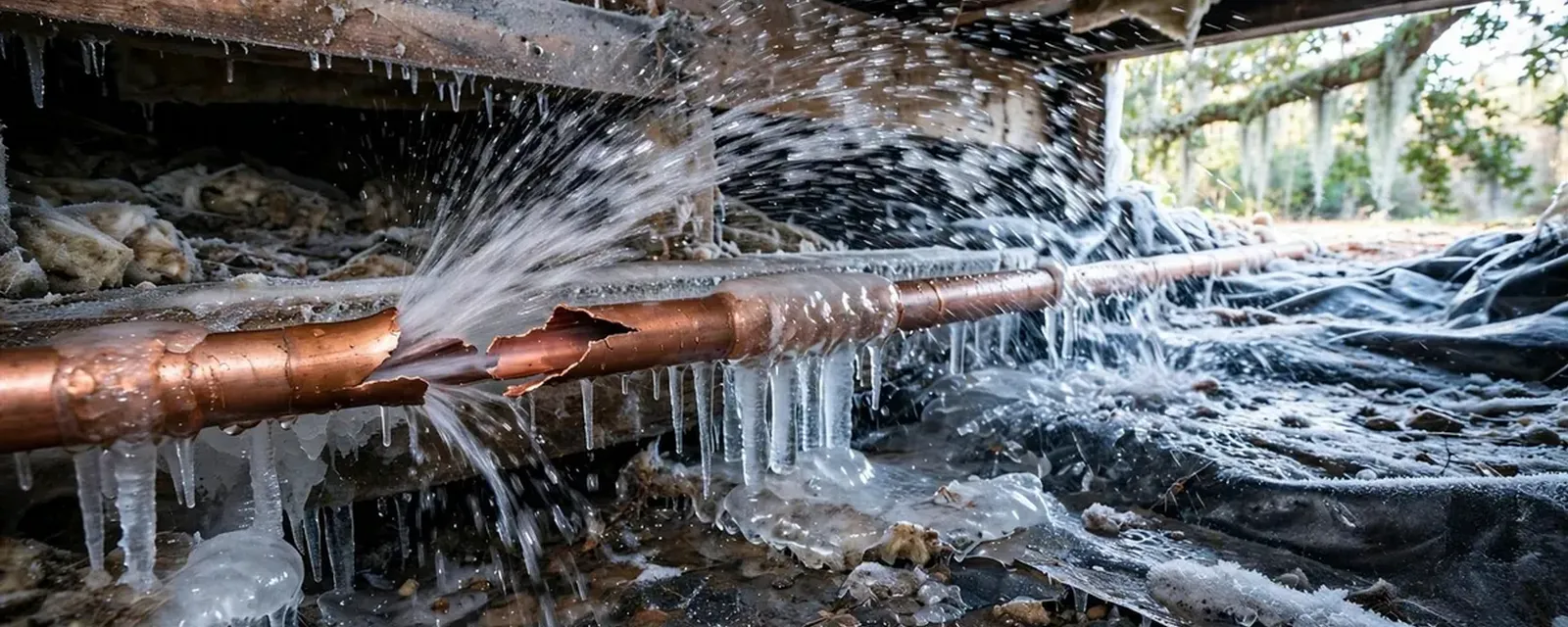
Frozen pipes cause trouble because ice expands, and the break often happens after the thaw, when water starts flowing again. Acting quickly and knowing where your shutoff is can save a ruined ceiling.
Spot the signs of a frozen pipe
- A faucet that runs a trickle or gives no water when the weather is freezing.
- Frost on a pipe that you can see in a basement, crawl space or garage.
- A bulge or a crack in an exposed pipe.
- Strange gurgling noises or banging when you open a tap.
- One fixture works while another does not, which points to a local freeze.
Pipes in exterior walls, unheated basements, crawl spaces and garages freeze first. If only one faucet is affected, the freeze is local. If nothing flows anywhere in the house, the main line or the meter area may be frozen.
How to thaw a frozen pipe safely
- Find the main water shutoff and make sure you can close it quickly.
- Open the affected faucet so water and steam can escape as the ice melts.
- Warm the pipe slowly with a hair dryer, heating pad or warm towels, starting near the faucet and moving toward the frozen area.
- Keep heating until full water pressure returns, then check the pipe and its joints for leaks.
- Leave the faucet open a little and keep the area warm until the cold snap passes.
- If you cannot reach the frozen section, or no water flows after an hour of work, call a plumber.
Never use flame
Do not use a propane torch, a kerosene heater or any open flame to thaw a pipe. It can start a fire and it can heat a joint until it fails.
Do not thaw a pipe while standing in water near electrical outlets.
Common thaw guidelines say never to use an open flame on a frozen pipe, since it can ignite framing or burst the pipe. A hair dryer on low moves heat slowly and gives you time to find the section that is frozen.
Need a plumber now? Dispatch is open 24/7.
Call the line and describe what is happening. A live person answers around the clock.
If a pipe has already burst
Close the main shutoff right away. Open the lowest faucet in the house and the highest one to drain the lines. Shut off the water heater's power or gas so the heating element or burner does not run dry.
Move belongings away from the water, photograph the damage and place buckets. Then call. Our burst pipe repair team stops the water, repairs the break and checks the rest of the run. If you are not sure where the water is coming from, leak detection helps find hidden leaks behind walls.
Where pipes freeze and what to do
| Location | Why it freezes | Prevention | If frozen |
|---|---|---|---|
| Exterior wall | Little insulation between the pipe and the cold | Open cabinet doors, insulate the pipe | Heat the wall area slowly |
| Unheated basement or crawl space | Cold air and drafts | Seal gaps, wrap pipes with insulation | Warm with a hair dryer |
| Garage | No heat source | Insulate or heat the supply lines | Warm the garage and open the tap |
| Outdoor spigot | Water left in the line | Disconnect hoses and shut the inside valve | Wait for a thaw, check for splits |
| Attic | Cold air and thin insulation | Insulate the pipe and the attic floor | Call a plumber |
A pipe that is frozen but not split will usually return to normal after a slow thaw. A pipe that has split will leak as soon as the ice melts, so watch it closely.
How to prevent freezing next time
- Insulate exposed pipes in basements, crawl spaces and garages with foam sleeves.
- Disconnect garden hoses and close the inside shutoff to outdoor faucets before the first hard freeze.
- Open cabinet doors under sinks on exterior walls during extreme cold.
- Let a faucet drip slightly on the coldest nights.
- Keep the thermostat at a steady temperature, even if you are away.
- Seal gaps around pipes where they pass through walls and rim joists.
If you will be away in winter, shut off the main and drain the lines, or have someone check the house daily.
What affects the cost of a frozen pipe repair
- Thaw only or repairA frozen but intact pipe may need only careful thawing. A split pipe needs cutting and a new section.
- Location of the breakA pipe in an open basement is easy. A pipe inside a finished wall requires opening it.
- Pipe materialCopper, PEX and older galvanized steel repair differently.
- Extent of water damageWater reaching drywall, flooring or insulation adds restoration work.
- Time of dayEmergency repairs outside regular hours are scheduled on the 24/7 line.
A clear price is given before work begins. Call (215) 714-6692. A sudden burst pipe is the kind of loss that homeowner insurance often covers, while freezing caused by long neglect may be treated differently, so read your policy.
Cheltenham local note: older homes, the creek and sump pumps
Cheltenham Township sits between about 63 and 411 feet in elevation, and much of the housing stock has stayed largely unchanged since the early twentieth century. Older houses often have supply lines through exterior walls and unheated cellars, so check those first when a cold snap arrives. We do not state a frost depth for buried lines, so ask Aqua Pennsylvania, which provides water service in the township, about the service line to your house.
Chapter 211 requires sump pumps to discharge through a rigid pipe at least one inch in diameter run outside the foundation. A frozen discharge line can stop the pump during a thaw, when Tookany Creek and the groundwater are rising.
Stormwater and sump discharge may not enter the sanitary sewer, though a seasonal waiver allows a temporary connection from November 30 to March 31 with a shutoff valve and a monthly fee. Ask the township building department at 215-887-1000 before changing a discharge.
Residents of Elkins Park near the creek and of Wyncote with older cellars should check pipes and sump discharge before the first hard freeze.
Frequently asked questions
It depends on how cold it gets and how long it stays cold. The break often shows up after the thaw, when water flows again.
It is usually where the water line enters the house, often in the basement near the meter. Find it before winter and check that it turns.
Yes, with the faucet open, heating slowly from the faucet toward the frozen area. Never use a torch or open flame.
A slight drip on the coldest nights can relieve pressure and keep water moving. It is a good habit for pipes on exterior walls.
Contact Aqua Pennsylvania, which provides water service in Cheltenham, about the line on the utility side.
Permit rules vary, so ask the Cheltenham Township building department at 215-887-1000 or Abington Township at 267-536-1000 for properties on that side.
Dispatch is open 24/7 at (215) 714-6692. Shut off the main first, then call.
Plumbing emergency in Cheltenham?
Call (215) 714-6692 now. A live dispatcher answers 24 hours a day.