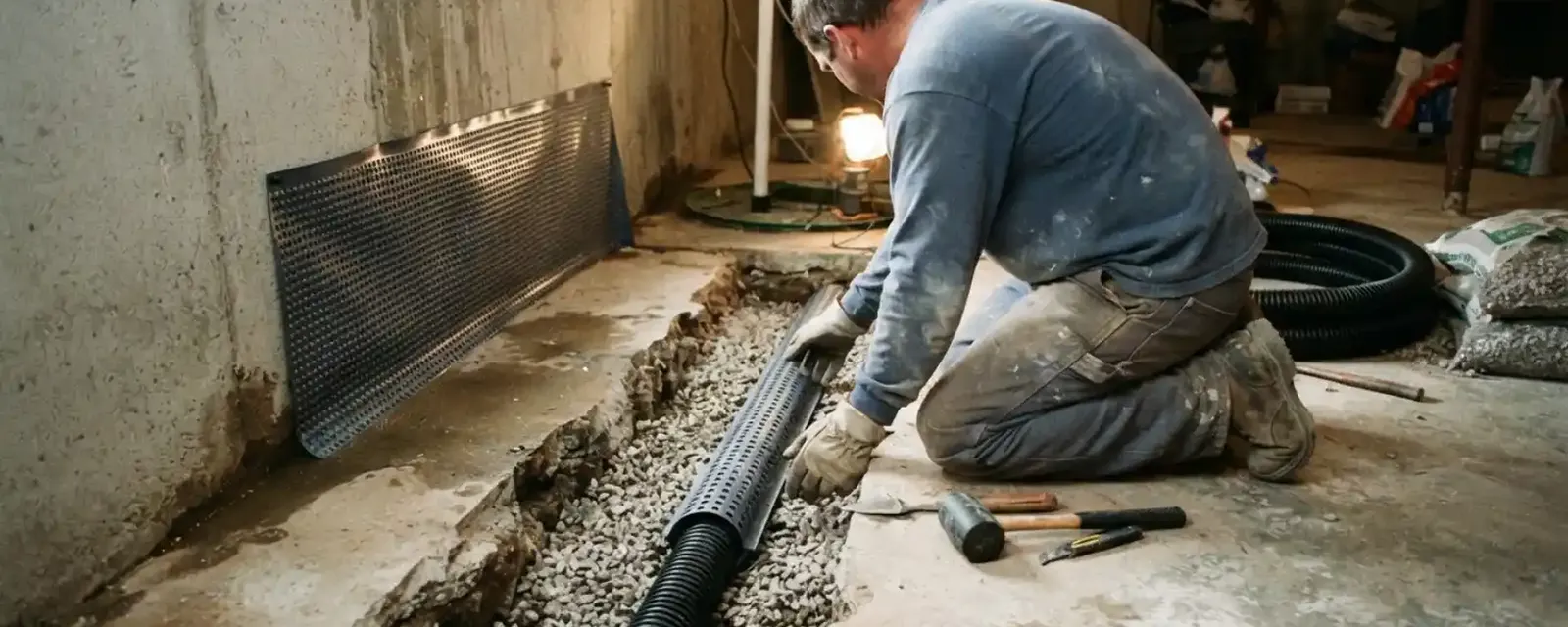
Basement Waterproofing vs Sump Pump: What Cheltenham, PA Basements Need
A sump pump removes water that has collected in a pit. Waterproofing is a broader group of fixes that stop or redirect water before it enters the basement. In many Cheltenham homes the two work together, but they solve different problems, and buying the wrong one wastes money.
Start by working out where your water comes from. This guide explains how to tell, what each system does, and which township rules apply before anyone installs a pump.
Three ways water gets into a basement
Surface water arrives from outside. Rain runs off the roof and ground toward the house, finds a crack in the wall, a window well, or a failed downspout connection, and enters at the wall or the floor edge.
Groundwater comes from below. When the water table rises after heavy or long rain, hydrostatic pressure pushes water up through the slab joint or through cracks in the floor.
Plumbing water is the third source and the one people forget. A leaking supply line, a failed water heater, or a backed-up floor drain can make a basement look like it flooded when the outside was never the cause.
Before you pay for either fix, rule out the plumbing source. Our leak detection service in Cheltenham checks for hidden supply and drain leaks so you do not waterproof a basement that is being filled from inside.
What each system does
| System | What it does | Best fit | Limits |
|---|---|---|---|
| Sump pump | Pumps collected water out of a pit and away from the foundation | Basements that take on groundwater or that have an interior drain | Does nothing if water never reaches the pit, and fails if power or the pump fails |
| Interior drainage | Channels water along the footing into the sump pit | Seepage at the wall and floor joint | Needs a working pump and discharge |
| Exterior grading and gutters | Moves roof and surface water away from the walls | Water that enters near downspouts or low spots | Cannot fix rising groundwater |
| Crack and joint sealing | Plugs specific entry points | Isolated cracks | A short-term fix if pressure is high |
| Battery backup | Runs the pump when power fails | Homes where outages and storms coincide | Needs maintenance and replacement over time |
Our page on basement waterproofing in Cheltenham explains the interior drainage side, and the companion page on sump pump installation and repair in Cheltenham covers pump work.
Need a plumber now? Dispatch is open 24/7.
Call the line and describe what is happening. A live person answers around the clock.
A simple way to diagnose your own basement
- Walk the basement during or right after a hard rain. Note where the water first appears.
- Check downspouts and gutters outside. Water pouring at the foundation from a short downspout is a cheap fix.
- Look at the floor edge. A dark line along the wall and floor joint suggests groundwater pressure.
- Check the sump pit if you have one. Is it empty, full, or running constantly?
- Photograph everything and note the time. The pictures help any contractor and any insurer.
- If water appears on a dry day, suspect plumbing, and shut off the main water supply if you cannot find the source.
Where Tookany Creek and the Cheltenham topography come in
Cheltenham's elevation runs from about 63 feet where Tookany Creek leaves the township to 411 feet at Sunset and Lindley Roads. Houses near the creek sit low and near the water table, while hillside houses see fast runoff after storms.
The U.S. Army Corps of Engineers reported in 2015 that urbanization had increased stormwater runoff and reduced the carrying capacity of Tookany Creek. For a homeowner the practical meaning is simple. Basements near the creek, including parts of Elkins Park, are more likely to face high groundwater, and a sump system with a backup is more than a luxury there.
Cheltenham local note: Chapter 211 sump pump rules
Cheltenham Township Code Chapter 211, Sump Pump and Groundwater Standards, sets rules that shape any install. A sump pump must discharge through a rigid pipe at least one inch in diameter, run through the outside foundation wall, with no valves or quick connections that change the discharge path. The water must be directed away from the foundation and must not affect neighboring properties.
Stormwater, groundwater, roof or cellar drain water, and sump discharge may not enter the sanitary sewer. Unused sump pits must be permanently filled with concrete. The township allows a seasonal waiver for a temporary sewer connection from November 30 to March 31 with a shut-off valve and monthly fee, and a non-seasonal waiver requires a showing of undue hardship.
Installing or altering sump pump plumbing requires a plumbing permit. Owners must allow township inspections. After a 30-day notice period, noncompliance carries a $100 monthly surcharge that can become a lien on the property. Plumbers who knowingly install noncompliant systems can lose their township registration for two years.
What that means for you: the right pump is also a code-compliant discharge. A system that dumps into a floor drain or a sewer cleanout, even if the basement stays dry, can put you out of compliance. Ask any contractor to explain the discharge path in writing.
Our Elkins Park page and Glenside page cover how drainage differs between creek-side and hillside neighborhoods.
Deciding what to buy
| What you see | Likely cause | First step |
|---|---|---|
| Water at the base of a wall after every storm | Surface water or a downspout problem | Fix gutters and grading, then reassess |
| Water rising through the floor joint in heavy weather | Groundwater pressure | Interior drainage with a sump pit and pump |
| Sump pump runs often even in dry weather | High water table or a failed check valve | Inspect the pump, check valve, and discharge |
| Wet basement on a dry day | Plumbing leak | Shut off the main and call for leak detection |
| Pump trips breakers or hums | Failing motor or stuck float | Repair or replace the pump |
Call (215) 714-6692 if you want a basement check. We give a clear price before work starts, and we will tell you if a cheaper fix such as extending a downspout solves the problem.
Frequently asked questions
It depends on where the water comes from. A pump handles collected groundwater, and waterproofing includes drainage, sealing, and outside fixes that keep water from entering.
Under Chapter 211, sump discharge may not enter the sanitary sewer, with limited waivers. Ask the township at 215-887-1000 about your property.
Chapter 211 says installing or altering sump pump plumbing requires a plumbing permit. Confirm the details with the township before you start.
A standard pump stops. A battery backup keeps pumping for a limited time, so it is worth considering where outages and storms often coincide.
Not necessarily. A dehumidifier, gutter repair, and grading may be enough. A plumber can check for leaks before you spend more.
Policies differ. Many exclude groundwater and sump backup unless an endorsement is purchased, so read your own policy or ask your agent.
Yes. Dispatch is open 24/7. A failed pump in a storm is urgent, and you can call (215) 714-6692 at any hour.
Plumbing emergency in Cheltenham?
Call (215) 714-6692 now. A live dispatcher answers 24 hours a day.