Emergency Sump Pump Repair in Cheltenham, PA
24/7 Emergency Line OpenA sump pump that stops during a storm leaves a basement minutes from water on the floor. Our emergency sump pump repair in Cheltenham, PA is available 24/7, including nights and weekends when storms hit.
While you wait, unplug nothing that is standing in water. Move belongings off the floor, keep your hands away from outlets near water, and call for help before the pit overflows.
When a failed sump pump is an emergency
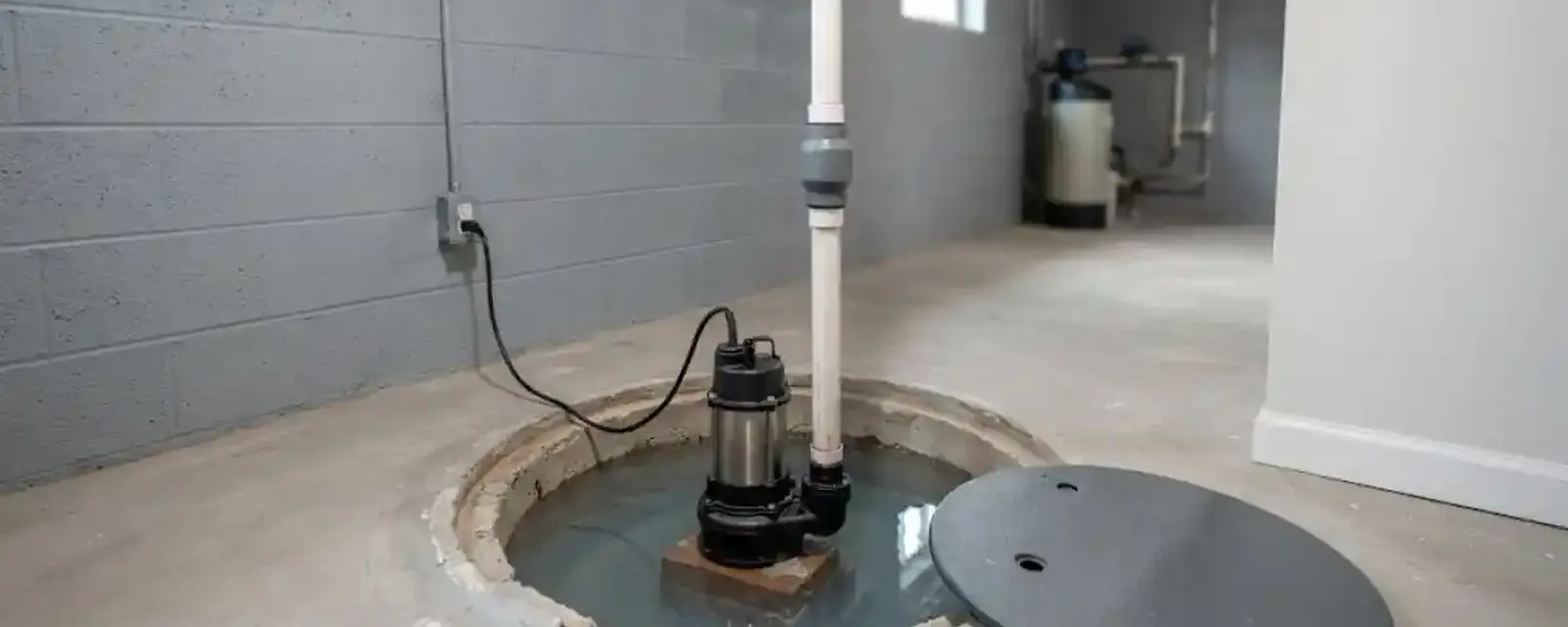
A sump pump sits in a basin below the basement floor and pushes groundwater out of the house through a discharge pipe. When it fails, the water table does what it wants and the basement fills.
The urgent signs are plain. The pit is full and the pump is silent, the pump runs but the water level does not drop, the float jams against the side of the basin, or the pump runs constantly without catching up during heavy rain.
Our dispatcher asks how high the water is in the pit and whether any is on the floor. That tells us whether we need a repair, a replacement pump or a temporary pump to hold the water until storms pass.
Protect your belongings
Lift boxes, rugs and electronics off the floor and onto shelves or tables.
Stay out of standing water
Do not wade into water near outlets, a panel or an extension cord.
Check the plug and breaker
A tripped breaker or loose plug is a quick check if it is safe to reach.
Call dispatch
Say how high the water is in the pit and whether any is on the floor.
Cheltenham Township's Chapter 211 rules, in plain language
Cheltenham Township Code Chapter 211 sets standards for sump pumps and groundwater, and it matters because a wrong installation can cost you money and a plumber his registration. We build to these rules on every job.
| Chapter 211 rule | What it means for your sump pump |
|---|---|
| Discharge through a rigid pipe of at least 1 inch, run through the outside foundation wall | No flexible hose draped out a window. The pipe needs to be solid and sized correctly. |
| No valves or quick connections that change the discharge path | The water goes where the pipe sends it, not wherever a coupling allows. |
| Water directed away from the foundation and off neighbors | We aim the discharge so it does not flow back to the house or onto the next lot. |
| Sump discharge may not enter the sanitary sewer | A pump connected to the sewer is a violation. Unused pits must be filled with concrete. |
| Seasonal waiver for a temporary sewer connection from November 30 to March 31 | A waiver requires a shut-off valve and a monthly fee. Ask the township before assuming it applies. |
| Noncompliance after a 30-day notice carries a $100 monthly surcharge that can become a lien | Fixing a bad discharge costs far less than leaving it alone. |
Installing or altering sump pump plumbing requires a plumbing permit under the same chapter. Plumbers who knowingly install a noncompliant system can lose their township registration for two years, which is why we do not connect a sump to the sewer even when a homeowner asks. Owners must also allow township inspections, so keep the discharge visible and the pit accessible.
Sump pump stopped during a storm?
Dispatch answers 24/7. Call now.
Repair or replace: how we decide
Most pump failures come down to one of four things: a stuck float switch, a clogged intake screen, a failed check valve or a worn motor. A float that jams is a cheap fix. A motor that has run for many seasons is usually worth replacing, because the next storm will test it again.
We test the float, listen to the motor, check the check valve for backflow and look at the discharge line for freezing or kinks. Then we tell you which fix fits. If the old pit is cracked, silted or too small, we recommend resetting it.
- Float switch tested and cleared of debris
- Check valve confirmed to hold water in the discharge pipe
- Pit inspected for silt, cracks and a sealed lid
- Discharge line confirmed rigid, sized and aimed away from the house
- Pump tested by filling the pit before we leave
Battery backup and what it does
Storms that flood basements often knock out power at the same time. A battery backup pump sits beside the main pump and takes over when the power fails or the primary pump cannot keep up.
A backup protects you for a limited time, depending on the battery and how fast water enters the pit. It is not a substitute for a good primary pump, and the battery needs testing each year. We install and test backups, and we explain how long yours can run before the battery needs help.
Storm drains, downspouts and the water around your house
Sump pumps work harder when the ground around the house is already saturated. Clogged storm drains, downspouts that dump at the foundation and a yard that slopes toward the house all send more water to the pit.
Township code treats downspouts, drains and hoses that connect to the lateral as prohibited inflow, and it asks owners to correct the connection within 60 days of notice. Cleaning a clogged outside drain and redirecting a downspout is often part of the fix. If the basement problem is bigger than a pump can handle, our basement waterproofing page explains the drainage options.
What changes the price of a sump pump job
- Pump typePedestal and submersible pumps differ in cost, noise, life and how they handle debris.
- Pit conditionReusing a sound pit costs less than breaking the floor to set a new one.
- Discharge routingA short, straight discharge costs less than one that must cross a finished space or a long yard.
- Backup systemA battery backup adds equipment and testing but protects during outages.
- PermitInstalling or altering sump pump plumbing requires a plumbing permit, so permit work is part of the job.
We give a clear price before work starts. Homeowners insurance often excludes groundwater and sump pump failure unless you added a rider, so read your policy and ask your insurer. Want your real number? Call (215) 714-6692.
Why sump pumps matter near Tookany Creek
Tookany Creek is the township's main waterway, and a 2015 U.S. Army Corps of Engineers report said urbanization in Cheltenham reduced the creek's carrying capacity. That means more storm runoff reaches the soil around homes near the creek, and basement pumps near Elkins Park work harder in wet seasons.
If your house is close to the creek, ask us to check the pump size and the battery backup before the rainy season. See how this ties to the neighborhood on our Elkins Park page.
Frequently asked questions
Yes. Dispatch is open 24/7 and storms rarely wait for business hours. Call (215) 714-6692, tell dispatch the water level in the pit, and we dispatch based on urgency.
No. Township Code Chapter 211 prohibits sump discharge from entering the sanitary sewer. A seasonal waiver exists from November 30 to March 31, but it requires a shut-off valve and a monthly fee, so ask the township first.
Installing or altering sump pump plumbing requires a plumbing permit under Chapter 211. We handle the permit process.
It should be a rigid pipe of at least 1 inch, run through the outside foundation wall, with no valves or quick connections, and aimed away from the foundation and the neighbors. We check all of this on every visit.
No. It is a second pump that runs during power failures or when the main pump cannot keep up. Test it each year.
Many policies exclude groundwater and sump failure unless you added a rider. Read your policy and ask your insurer before a storm.
Yes. Property managers can call for tenant units. Tell dispatch about access and the water level in the pit.
Keep the basement dry
Call (215) 714-6692 for emergency sump pump repair in Cheltenham.