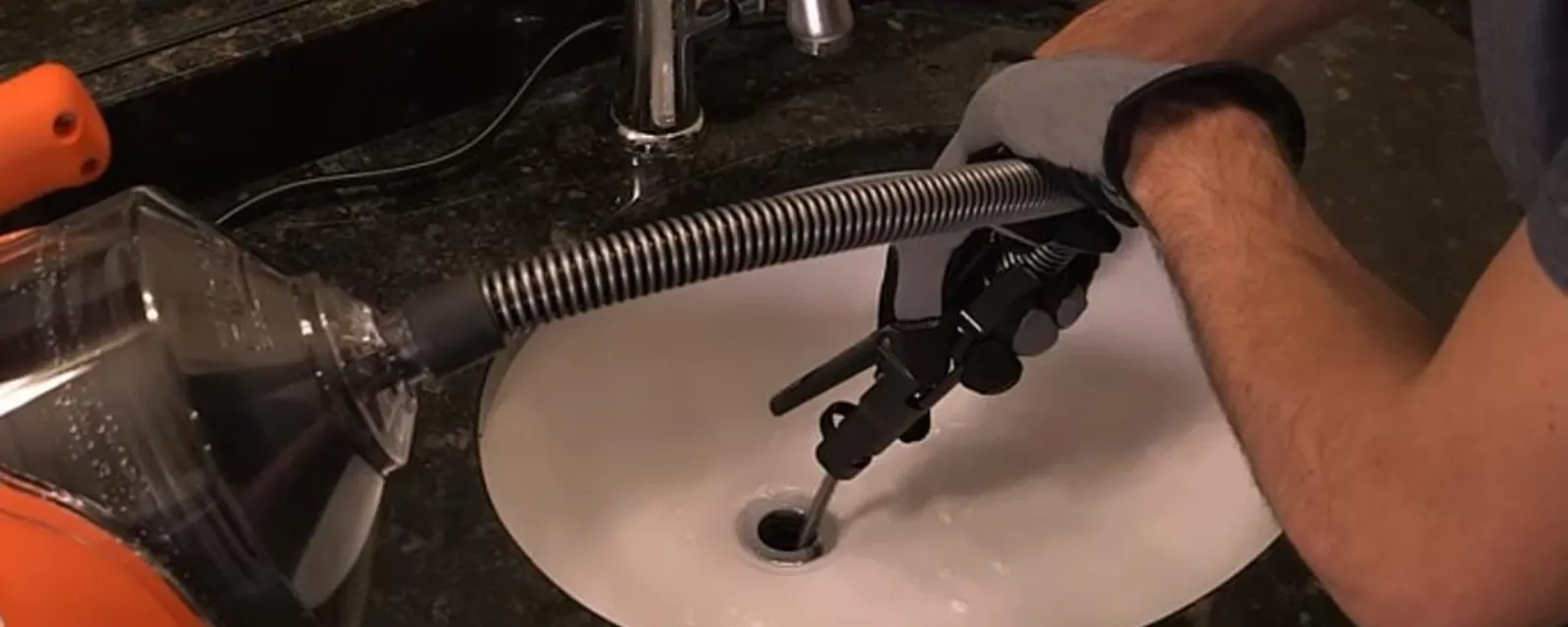
Vinegar and Baking Soda for Clogged Drains in Cheltenham, PA
Vinegar and baking soda can freshen a drain and loosen a thin film of grease, but they will not clear a real clog. The fizzing is mostly carbon dioxide and water, and the mild reaction has little force against hair or a solid blockage.
If you want to try it first, this guide shows how to do it safely, how to judge whether it helped, and what to do next in a Cheltenham home when it did not.
What the fizz actually does
Baking soda is a mild base and vinegar is a weak acid. Mixed, they produce carbon dioxide gas, water, and a salt. The foam looks dramatic but it is gentle, and it ends up as mostly saltwater.
That makes the mixture useful for light jobs. It can loosen the oily film in a kitchen trap and reduce odor from biofilm. It cannot cut through a wad of hair, shift a paper plug, or push a root ball out of a line.
How to use it without making things worse
- Remove standing water from the sink so the mixture can reach the pipe.
- Pour about half a cup of baking soda down the drain and follow with an equal amount of white vinegar.
- Cover the drain with a plug or a wet cloth for ten to fifteen minutes so the reaction stays in the pipe.
- Flush with a kettle of very hot tap water, or hot but not boiling water if the pipes are plastic.
- Test with the tap. If the water runs normally, you are done. If it is still slow, stop and move to a plunger or trap cleaning.
Do not follow it with a chemical cleaner
Never pour a commercial drain opener on top of vinegar. Acid and strong chemical cleaners can react unpredictably and splash back. If you want to try a different product, flush the line with plenty of water first and ventilate.
Poison control guidelines warn against mixing vinegar with bleach, which releases chlorine gas. If a drain has had bleach in it recently, flush with water and keep vinegar out of the sink until the trap has cleared.
Need a plumber now? Dispatch is open 24/7.
Call the line and describe what is happening. A live person answers around the clock.
A clear scorecard: when it helps and when it does not
| Problem | Vinegar and baking soda | What to do instead |
|---|---|---|
| Slow kitchen drain from light grease film | Can help a little | Hot water and dish soap, then clean the trap |
| Bad smell from a rarely used drain | Often helps | Run water, refill the trap, and clean the strainer |
| Hair clog in a tub | Does not help | Pull the strainer and use a hand auger |
| Standing water in a toilet | Does not help | Flange plunger, then call if it repeats |
| Several fixtures gurgling or backing up | Does not help | Stop using water and call for a cable machine and camera |
| Garbage disposal jam | Does not help | Reset, free the flywheel with the wrench, then call if it hums |
If the problem is a jammed or humming disposal, our page on garbage disposal repair in Cheltenham covers what to check and when a replacement makes more sense.
Why a drain keeps clogging in an older house
Houses built in the early twentieth century often have cast iron or clay drain lines and a different slope than modern code expects. Years of grease and scale roughen the pipe wall, and new debris catches on the rough spots, so the clog returns even after you clear it.
A cable machine passes through the center of the pipe. It does not scrub the wall. If your drain clears for a week and then slows again, ask about drain cleaning in Cheltenham with a camera, so the pipe condition is visible rather than guessed.
Cheltenham local note: when a stubborn clog is the lateral
Cheltenham Township Code Chapter 238, section 238-14.2, covers sanitary sewer laterals, which are the pipes that connect houses to the public sewer. The code says that if roots block a lateral, the owner must have it cleaned within 30 days of township notice and give 48 hours' notice to the township before the work begins. The cleaning proceeds from the building toward the main.
What that means for you: if a clog keeps returning in every drain on the lowest level of your house, no amount of kitchen-cabinet chemistry will help, because the blockage is outside the building. Root growth in a lateral is a common reason that main-line clogs repeat.
Aqua Pennsylvania operates the township sewer system, so a backup that appears to start in the street should be reported to Aqua as well as to a plumber. The private lateral is the owner's pipe, but the main is not.
Wyncote and Glenside both have older housing, and our pages on Wyncote and Glenside explain what we look for in those lines.
Other kitchen-cabinet remedies, and how they compare
Hot water with a squirt of dish soap is the best of the home methods for a greasy kitchen line, because the soap helps emulsify fat and the heat keeps it moving. Use it right after washing dishes, while the grease is still warm and has not set in the trap.
A cup of salt followed by hot water has a similar light-duty effect. None of these methods replace a mechanical fix. A clog is a physical object, and the fastest way to deal with a physical object is to grab it, break it up, or push it through.
Enzyme cleaners are slower and gentler. They digest organic film over hours and suit a drain that smells or runs slow, but they will not open a drain that is fully blocked. Read the label, never combine products, and stop if anything in the pipe starts to smell sharp or sting your eyes.
If you try one remedy and the drain is no better the same day, treat that as information. The blockage is probably solid, and the next move is a plunger, a trap cleaning, or a cable rather than a second round of chemistry.
A better routine than a monthly fizz
- Use a drain strainer in every shower, tub, and kitchen sink.
- Wipe fat and oil from pans before washing them.
- Run hot water for a full minute after using the kitchen sink.
- Clean the trap under each sink once or twice a year.
- Keep a small hand auger and a good flange plunger where you can reach them.
These habits cost less than a service call and prevent the slow buildup that causes most kitchen clogs.
Frequently asked questions
Only light film and odor. It does not dissolve hair, paper, or roots, so a real clog needs a plunger, trap cleaning, or an auger.
In small amounts, yes for most household pipes. Use hot but not boiling water on plastic pipes and avoid combining it with commercial cleaners.
Occasionally for odor or light buildup. If you need it weekly, the drain has a real problem that deserves a camera look.
It can freshen the chamber, but it will not free a jam or fix a humming motor. Reset the unit and try the hex wrench, then call if it will not turn.
A dry trap, buildup in the overflow, or a damaged vent can cause a smell that cleaning does not remove. A plumber can check the venting and trap arm.
Stop using water, and call. That pattern points to the main line or lateral, which chemistry cannot reach.
Yes. Dispatch is open 24/7. An overflowing toilet or a sewage backup is an emergency, and you can call (215) 714-6692 any hour.
Plumbing emergency in Cheltenham?
Call (215) 714-6692 now. A live dispatcher answers 24 hours a day.