How to Repair a Leaking Hot Water Heater in Cheltenham, PA
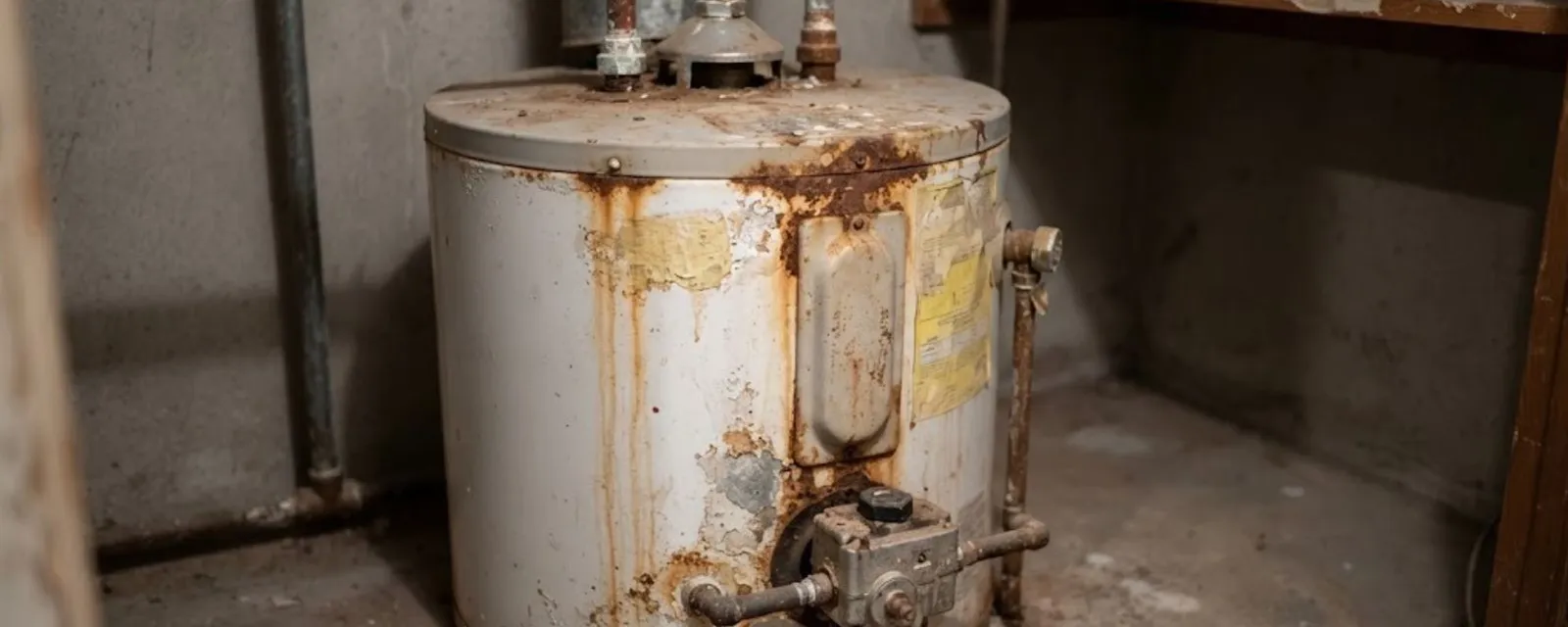
A leaking hot water heater is repairable only if the water comes from a fitting, a valve or a connection. Water seeping from the tank body means the steel has corroded through, and no repair holds. Shut off the power or gas, close the cold water inlet, and find the exact point of the leak before you do anything else.
This guide walks through the source of each leak, the safe checks you can do, and where to stop and call a plumber. Safety comes first, because a water heater holds scalding water and runs on electricity or gas.
Do these four things first
- Turn off the power at the breaker for an electric unit, or turn the gas control to pilot or off for a gas unit.
- Close the cold water shutoff valve on the pipe above the tank.
- Open a hot tap upstairs to relieve pressure, and place a bucket or a wet-dry vacuum at the leak.
- Move stored items away from the base of the heater and photograph any water on the floor.
Hot water and electricity
Do not touch the heater or stand in water near it while it is connected to power. Turn the breaker off before you touch any wet equipment.
If you smell gas, leave the building and call PECO at 1-800-841-4141 or 911 from outside.
Find where the water is coming from
| Leak location | Likely cause | DIY possible? | Typical next step |
|---|---|---|---|
| Cold or hot inlet pipe | Loose union or worn fitting | Yes for a simple tighten | Retighten or replace the connection |
| Temperature and pressure valve | Excess pressure or a failed valve | Replace the valve only if the water is off | Plumber for pressure issues |
| Drain valve at the bottom | Worn washer or loose valve | Sometimes | Replace the drain valve |
| Top of the tank | Anode rod fitting or a loose pipe | Rarely | Plumber to inspect |
| Bottom or side of the tank | Corroded tank | No | Replace the water heater |
| Under the unit, puddled | Condensation or a failing tank | Wait and watch | Dry the area and monitor for 24 hours |
Dry everything with a rag, then wrap a dry paper towel around each fitting for an hour. The one that gets wet is the source. Many people replace the wrong part because the water runs down the tank and drips from the lowest point.
Need a plumber now? Dispatch is open 24/7.
Call the line and describe what is happening. A live person answers around the clock.
Fittings and valves you can often fix
A loose inlet or outlet connection is the most common repairable leak. With the water closed and the line drained, tighten the union or replace a worn flexible connector. Use thread tape only where the fitting calls for it, and do not overtighten a compression nut.
The temperature and pressure relief valve is a safety device. If it drips, it may be responding to high pressure or a failing seat. Do not cap it or plug it. A plumber should test the pressure and, if needed, install an expansion tank before replacing the valve.
A dripping drain valve is cheap to replace. Close the cold supply, drain a few gallons to relieve pressure, and swap the valve with the right size for your tank.
When the tank itself is leaking
Over years, sediment collects and the glass lining inside the tank cracks. Water reaches the steel, corrosion starts and a pinhole becomes a stream. Once the tank shell leaks, there is no sealant or patch that is safe to use.
Replace the unit. If the heater is more than about ten years old, replacement is usually better even when the leak looks small, because the next failure is close behind. Our water heater replacement page describes the process, and the water heater repair page lists what we can fix without replacing the tank.
Why water heaters leak
- Sediment buildup that overheats the tank bottom and cracks the lining.
- A worn-out anode rod that no longer protects the steel from corrosion.
- High household water pressure that stresses the tank and valves.
- Thermal expansion in a closed system without an expansion tank.
- Age, because most tanks have a limited life even with good care.
Draining a few gallons from the tank once a year flushes sediment, and checking the anode rod every few years can add useful life. Neither is a cure for a tank already leaking.
What drives the cost
- Repair or replaceA valve or fitting is a short repair. A failed tank means a new water heater, removal and disposal of the old one.
- Fuel typeGas and electric units need different venting, wiring and shutoff work.
- Tank size and efficiencyLarger and higher-efficiency units cost more up front.
- Access and locationA heater in a tight basement corner takes longer to move than one in an open utility room.
- Code updatesExpansion tanks, drain pans and venting corrections may be needed to bring the install up to standard.
We give a clear price before work begins. Call (215) 714-6692 and describe what you see. Sudden tank failure that floods a finished basement is often a claim-worthy event, while a slow leak from age is usually maintenance, so check your policy.
Cheltenham local note: basements, water and permits
Aqua Pennsylvania provides water service in Cheltenham and publishes an annual water quality report. Mineral content differs by address, so test your tap and ask Aqua for the report that covers your address instead of guessing. Minerals are one reason sediment builds in a tank, which is why a flush is worth doing.
Permit rules for a water heater replacement vary, so ask the Cheltenham Township building department at 215-887-1000. If your property sits on the Abington side of Elkins Park or Glenside, call Abington Township at 267-536-1000. Plumbing work in the township must be done by a licensed plumber under Chapter 209.
Elkins Park residents have reported basement flooding near Tookany Creek, so if your water heater sits in a low basement, a leak and a flood can look alike. Raising the unit on a stand and keeping a drain pan under it are practical steps for homes in Elkins Park and Jenkintown.
Frequently asked questions
No. A leak through the tank shell means the lining and steel have failed. The tank must be replaced.
It is a safety device, so do not cap it. Call a plumber to check household pressure and the valve itself.
Shut it off and close the water as soon as you see a leak. Running it risks flooding and, with gas units, safety hazards.
It may be condensation, which is normal in some conditions, or a slow leak. Dry the area and check again after a day.
Only when the tank body leaks. Fittings, valves and drain connections can be repaired.
Permit rules vary, so ask the Cheltenham Township building department at 215-887-1000, or Abington Township at 267-536-1000 for properties on that side.
Dispatch is open 24/7 at (215) 714-6692. Shut off the power or gas and the cold water first.
Plumbing emergency in Cheltenham?
Call (215) 714-6692 now. A live dispatcher answers 24 hours a day.