High Water Bill? How to Find a Hidden Leak in Your Cheltenham, PA Home
A water bill that jumps without a change in your habits usually points to a leak you cannot see, and the most common source is a running toilet. You can confirm a leak in about fifteen minutes with a meter test, and you do not need tools beyond your eyes and a pen.
Here is the test, the leaks it tends to uncover, what to do about each, and how to talk to Aqua about the bill once the leak is fixed.
The fifteen-minute meter test
- Make sure nothing in the house is using water. Turn off the ice maker, dishwasher, washing machine, and irrigation system.
- Find your water meter. In many homes it is near where the main line enters the basement, or in a pit near the street.
- Look at the leak indicator, a small dial or triangle that spins when water flows. If it moves with everything off, water is leaking somewhere.
- If the meter has only numbers, write down the reading, wait fifteen minutes without using water, and read it again.
- To split inside from outside, close the main shutoff valve inside the house and look again. If the meter stops, the leak is inside the house. If it keeps moving, the leak is on the line between the meter and the house.
Check before you panic
A softener or filter regenerating, a humidifier, or a dripping outside faucet can also move the meter. Rule these out first, and take a photo of the dial for your records.
The usual suspects, ranked by how often they cause it
| Leak source | How to check | Typical fix |
|---|---|---|
| Toilet flapper or fill valve | Add a few drops of food coloring to the tank and wait ten minutes without flushing | Replace the flapper or fill valve, see toilet repair |
| Dripping faucet or shower valve | Look and listen, and check under the sink | Replace cartridge or washers |
| Water heater relief valve or tank | Look for water on the floor, a corroded base, or a wet discharge pipe | Replace the valve or tank |
| Hose bib or outdoor line | Watch the meter with the outside spigot open and closed | Replace the bib or repair the line |
| Concealed supply line | Listen for running water, check for warm spots and wet drywall | Locate with detection tools and repair |
| Underground service line | Meter moves with the house main closed | Locate, excavate or reroute |
A running toilet is the leading cause and an easy repair. Our page on toilet repair in Cheltenham shows how a worn flapper can waste water silently day and night.
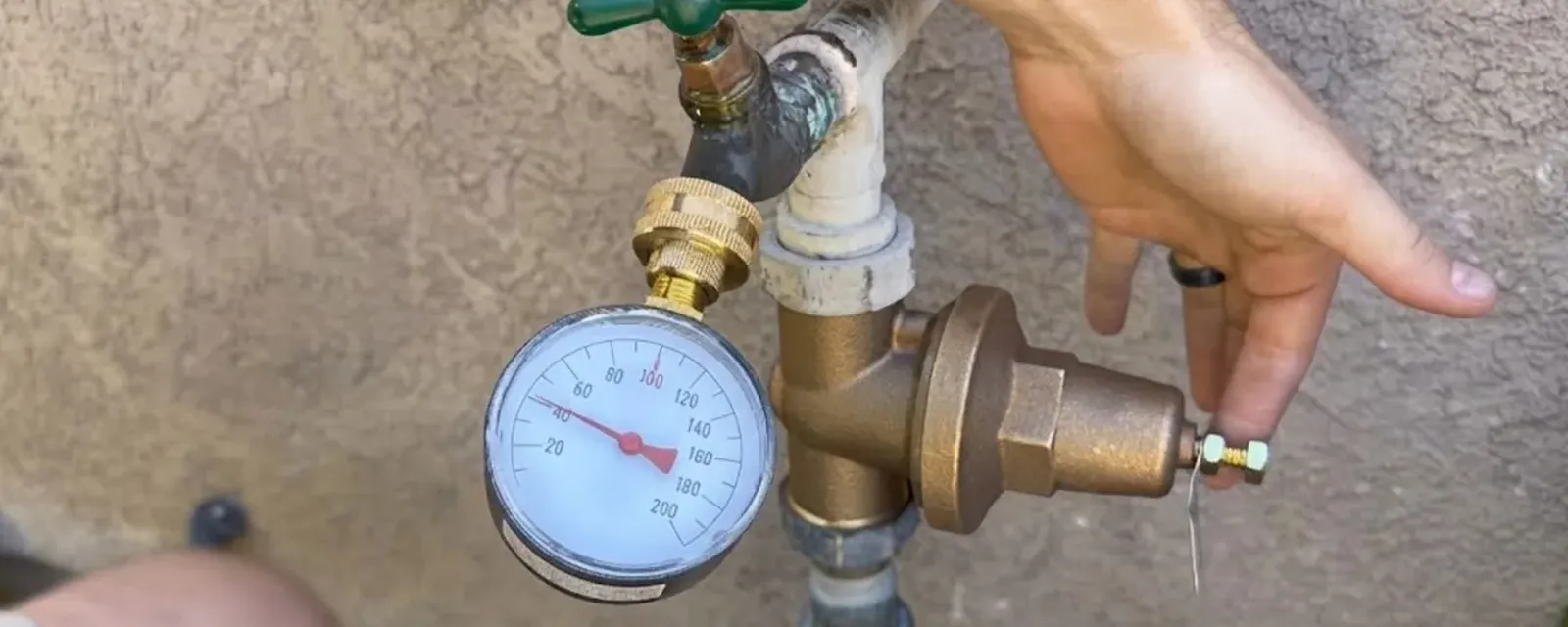
The International Plumbing Code (IPC) limits static water pressure to 80 psi, and higher pressure can wear fixtures and cause small leaks. A pressure gauge at the hose bib takes a minute to read and is worth doing before you open walls to look for a leak.
Need a plumber now? Dispatch is open 24/7.
Call the line and describe what is happening. A live person answers around the clock.
Leaks that hide behind walls and under floors
If the toilet and the faucets check out and the meter still moves, the leak is probably in a supply line inside a wall, under a floor, or underground between the meter and the house. Signs include a warm spot on a floor, a musty smell, stained plaster, a hissing sound at night, or a sudden drop in water pressure.
Finding it without tearing things apart takes equipment. Acoustic listening, pressure testing, and thermal imaging narrow the location so the repair can be small. If you want a trained eye, leak detection in Cheltenham uses those methods to pinpoint a leak before opening a wall.
Take photos and document the readings. They help with insurance and with your discussion with the water utility.
What to do while you wait for a plumber
Shut off the water
Close the main shutoff valve if water is visibly escaping or if the meter is racing. Know where it is before you need it.
Protect the floor
Move valuables, set out towels and buckets, and keep people away from wet electrical areas.
Photograph and log
Capture the meter, the damage, and the time. Dates matter for any claim or bill discussion.
Do not guess with tools
Cutting into a wall without locating the leak can double the damage. Call the 24/7 line instead.
Cheltenham local note: Aqua, your bill, and your service line
Aqua Pennsylvania provides water service in Cheltenham, and since the township sewer sale in 2019, residents have received combined water and sewer bills. Because the two charges appear together, a leak can affect more than one line of the bill, depending on how the account is structured. Ask Aqua how your account is billed before you decide how to document the problem.
Aqua publishes an annual water quality report and offers a service line inventory tool at aquawater.com/leadmap. The map can tell you what material your service line is made of, which matters if you have an old line that is leaking or corroding. We do not state a hardness figure here, so test your tap or ask Aqua for the report covering your address.
What that means for you: once you have fixed the leak, keep the plumber's invoice and your meter photos, and call Aqua to ask whether any billing adjustment policy applies. Whether an adjustment is possible is Aqua's decision, so ask rather than assume.
Our Wyncote page notes the age of the historic-district houses, and our Jenkintown page covers the neighboring borough, where service arrangements can differ. If you live outside Aqua's service area, check your own bill for the utility name.
How to prevent the next surprise
- Read your meter once a month and write the number down. A rising baseline gives you an early warning.
- Replace toilet flappers every few years, or sooner if you hear the tank refilling on its own.
- Install a leak alarm or a water sensor under the water heater and washing machine.
- Know where the main shutoff valve is and make sure it actually turns.
- Inspect hoses on the washing machine and replace braided hoses when they show wear.
We give a clear price before work starts, and we will say plainly if the fix is a five-minute flapper rather than a larger job.
Frequently asked questions
A leak is the most common reason, and a running toilet is the usual source. A seasonal change, guests, or irrigation can also raise a bill, so compare the meter test results with your habits.
Turn off everything that uses water, read the meter, wait fifteen minutes without using any, and read it again. If the numbers change or the leak indicator moves, water is escaping.
Look near where the main enters the basement, or in a pit near the street. If you cannot find it, ask Aqua or a plumber to show you.
That is Aqua's decision. Keep the repair invoice and meter photos and ask the utility whether an adjustment policy applies to your account.
Often yes. Listening and pressure tests narrow the location so the excavation is small.
Aqua offers a service line inventory tool at aquawater.com/leadmap. Use it to look up your address, and ask a plumber to confirm with a visual check.
Yes. Dispatch is open 24/7. If water is running where it should not, shut off the main valve and call (215) 714-6692 at any hour.
Plumbing emergency in Cheltenham?
Call (215) 714-6692 now. A live dispatcher answers 24 hours a day.