Cement and Pipe Lining for Old Pipes: A Cheltenham, PA Guide
Pipe lining repairs an old pipe from the inside instead of digging it up. Cement mortar lining is a long-standing method for large water mains, while cured-in-place pipe lining, often shortened to CIPP, is the method most used for the drain and sewer pipes inside and under a home.
For Cheltenham homeowners the useful question is not which method sounds best. It is whether your pipe is a good candidate at all, and a camera inspection answers that before anyone quotes a price.
Two methods that get confused
Cement mortar lining coats the inside of a metal pipe with a thin layer of cement. Utilities use it on water mains, where it controls corrosion and restores flow in large diameter pipes. It is not a typical choice for a four-inch house drain.
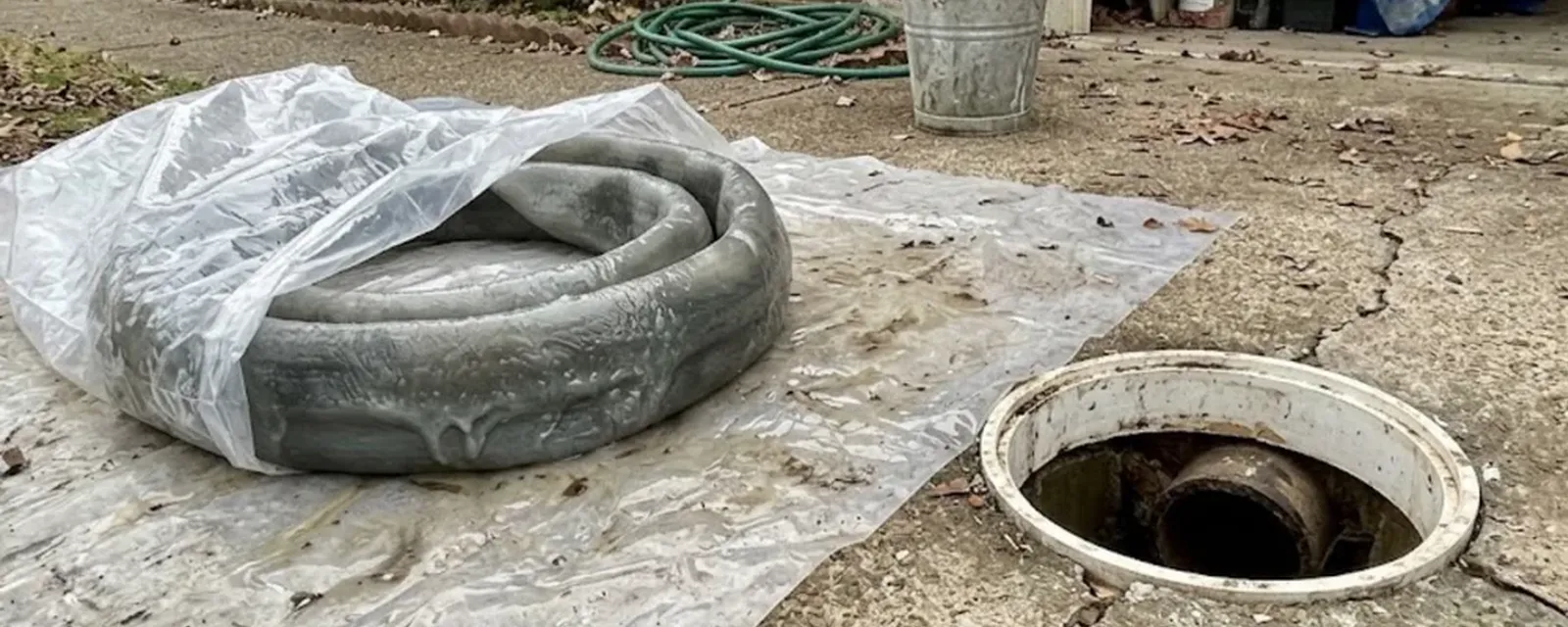
Cured-in-place pipe lining works differently. A flexible felt tube soaked in resin is pulled or inverted into the old pipe, inflated against the walls, and cured until it hardens into a new pipe inside the old one. It is the method behind most trenchless sewer lateral repairs.
When a homeowner says cement lining, they usually mean one of these. Asking the contractor to name the exact method and material is the first useful step.
What a camera inspection must show first
No lining job should be priced without a recorded camera inspection. The video shows whether the pipe is a candidate and what has to be done before lining. A good sewer camera inspection in Cheltenham identifies the following.
- The pipe material, such as clay, cast iron, or Orangeburg fiber, and its approximate condition.
- Cracks, offset joints, and sags that hold water, which a liner would trap rather than fix.
- Roots entering at joints, and how heavy the intrusion is.
- Any collapse or crushed section, which usually rules out lining at that spot.
- The location and depth of each defect, measured from the cleanout, so the repair can be scoped.
Ask for the video and the footage log. If a contractor will not share them, that tells you something.
Need a plumber now? Dispatch is open 24/7.
Call the line and describe what is happening. A live person answers around the clock.
Lining versus digging: a decision table
| Situation | Lining likely fits | Dig and replace likely fits |
|---|---|---|
| Root intrusion at joints, pipe otherwise round | Yes, after cleaning and cutting roots | Only if the pipe is also failing elsewhere |
| Hairline cracks or open joints | Yes, a full liner or a short spot liner | Not usually |
| Pipe collapsed or badly offset | Rarely | Yes, the pipe has to be replaced at that point |
| Belly that holds standing water | A liner follows the belly and does not remove it | Yes, if drainage matters |
| Many bends or tight fittings | Depends on the liner and the access | May be simpler |
| Landscaping or hardscape above the pipe | Less disruption | Higher disruption and restoration |
For defects that call for a full repair rather than a patch, read about sewer line repair in Cheltenham for how we weigh lining against replacement.
How a cured-in-place liner is installed, step by step
- Clear the line with a cable or hydro jetting so the liner can seat against clean pipe walls.
- Re-inspect with the camera and record the clean pipe, noting every lateral connection.
- Prepare the liner, saturate it with resin, and insert it from an access point such as a cleanout.
- Inflate it against the pipe walls and cure it with hot water, steam, or light, depending on the system.
- Reopen any branch connections from the inside with a cutter robot.
- Run a final camera pass and record it as proof of the finished pipe.
The homeowner's role is to make sure the access point exists and the cleanout is usable. Without a cleanout, an extra access has to be created, and that changes the scope.
Cheltenham local note: lateral rules and a nearby example
Cheltenham Township Code Chapter 238, section 238-14.2, allows the township to inspect private sewer laterals, including by video, with 15 days of written notice. The township must give the owner a copy of the video report. An owner who objects can pay for a compliant recording and deliver it within 60 days. Contractors repairing or replacing a building sewer need a plumbing permit first.
What that means for you: a camera video of your lateral is useful whether you hire a lining contractor or not, and a clear recording supports a conversation with the township if it ever inspects your line. Ask the building department at 215-887-1000 how the permit rule applies to your lining job.
Aqua Pennsylvania purchased the township's sewer system for $50.25 million and described planned improvement spending of nearly $50 million over ten years. A press report also noted the township had replaced four miles of pipe along Tookany Creek. Public mains are Aqua's responsibility, and your lateral is yours, so a lining job should end exactly at the property line connection.
Next door in Jenkintown, the borough owns its sanitary sewer, built in the 1920s with about ten miles of pipe and 350 manholes. A 2019 borough project in the West Avenue drainage basin used spot repairs, cured-in-place pipe lining, root control, and grouting without excavation to reduce stormwater getting into the system. The streets included Cedar Street, Walnut Street, West Avenue, Greenwood Avenue, and York Road.
That project shows lining is a standard tool for older sewers, but note the limit. A borough or utility may line a main while your own lateral still needs its own inspection. See our Jenkintown page and our Elkins Park page for how we work with older systems.
Questions to ask before you sign
- Which exact method and material will be used, and what is the manufacturer's installation procedure?
- May I see the pre-lining camera video and the defect log?
- How will the connections to the house and to the main be handled?
- Is a plumbing permit required, and who will get it?
- What warranty is written down, and what voids it?
- Will you provide a post-lining camera video?
Frequently asked questions
Not exactly. Cement mortar lining is mostly used for water mains. Cured-in-place pipe lining uses a resin-soaked liner and is the common trenchless method for drain and sewer pipes.
No. Collapsed, badly offset, or deeply sagging pipe usually cannot be lined effectively, and a camera inspection is the only way to know.
The roots must be cleared and cut back before lining. The liner then seals joints so new roots cannot enter, but it does not kill the tree.
Many jobs are completed in a day after the line is cleaned and inspected, but the timeline depends on length, access, and cure method. Your installer should give a schedule in writing.
Cheltenham Township Code Chapter 238 requires a plumbing permit for repairing or replacing a building sewer. Ask the township at 215-887-1000 how that applies to a liner.
Aqua owns and operates the public sewer system, while the private lateral is generally the owner's responsibility under the township code. Ask Aqua and the township about your specific connection.
Yes. Dispatch is open 24/7. A sewer backup is an emergency, and lining can be planned after the line is cleared and inspected.
Plumbing emergency in Cheltenham?
Call (215) 714-6692 now. A live dispatcher answers 24 hours a day.