Bleach and Clogged Drains: A Cheltenham, PA Homeowner Guide
Bleach does not clear most clogs. It is a disinfectant, not a drain opener, and it cannot dissolve hair, grease, soap scum, or roots, which are what actually block pipes in Cheltenham homes. Pouring it in can also create a hazard if the drain holds another cleaner.
Here is what bleach really does, what to try instead, when a slow drain is a warning about the main line, and how to tell the difference before you waste an evening.
What bleach does and does not do
Household bleach is a sodium hypochlorite solution. It kills germs and lightens stains. It does not break down a hairball in a tub trap or a collar of grease in a kitchen line. The clog stays where it is and the bleach flows around it.
Often the drain seems better for a day because the bleach thinned the slime coating the clog. The clog returns, usually in a few days, because the blockage itself was never touched.
The mixing hazard that matters most
The real danger with bleach in a drain is what else is already in the pipe. Many drain openers and toilet bowl cleaners contain acids or ammonia. Mixing those with bleach releases toxic gas, and the closed space of a bathroom makes it worse.
Never combine these
Do not add bleach to a drain that has had another cleaner in it recently, and never pour two products in sequence. If you used a chemical opener, flush with plenty of cold water, ventilate the room, and wait before trying anything else.
If anyone feels dizzy, coughs, or has burning eyes after a mix, leave the room, get fresh air, and call 911 or Poison Control. Do not go back in to rinse the drain.
The CDC guidelines for household chemicals say never to mix bleach with ammonia or acid cleaners, because the gases they release can injure your lungs. If bleach has gone into a drain, run water and leave the room ventilated before anyone adds another product.
Need a plumber now? Dispatch is open 24/7.
Call the line and describe what is happening. A live person answers around the clock.
What actually works, in order
- Remove the stopper or strainer and pull out the visible hair and gunk by hand with gloves.
- Use a plunger with a good seal. For a sink with an overflow, block the overflow opening with a wet rag first so the pressure goes down the drain.
- Disassemble the P-trap under a sink if you can. Put a bucket underneath, clear the trap, and reassemble with the washers seated.
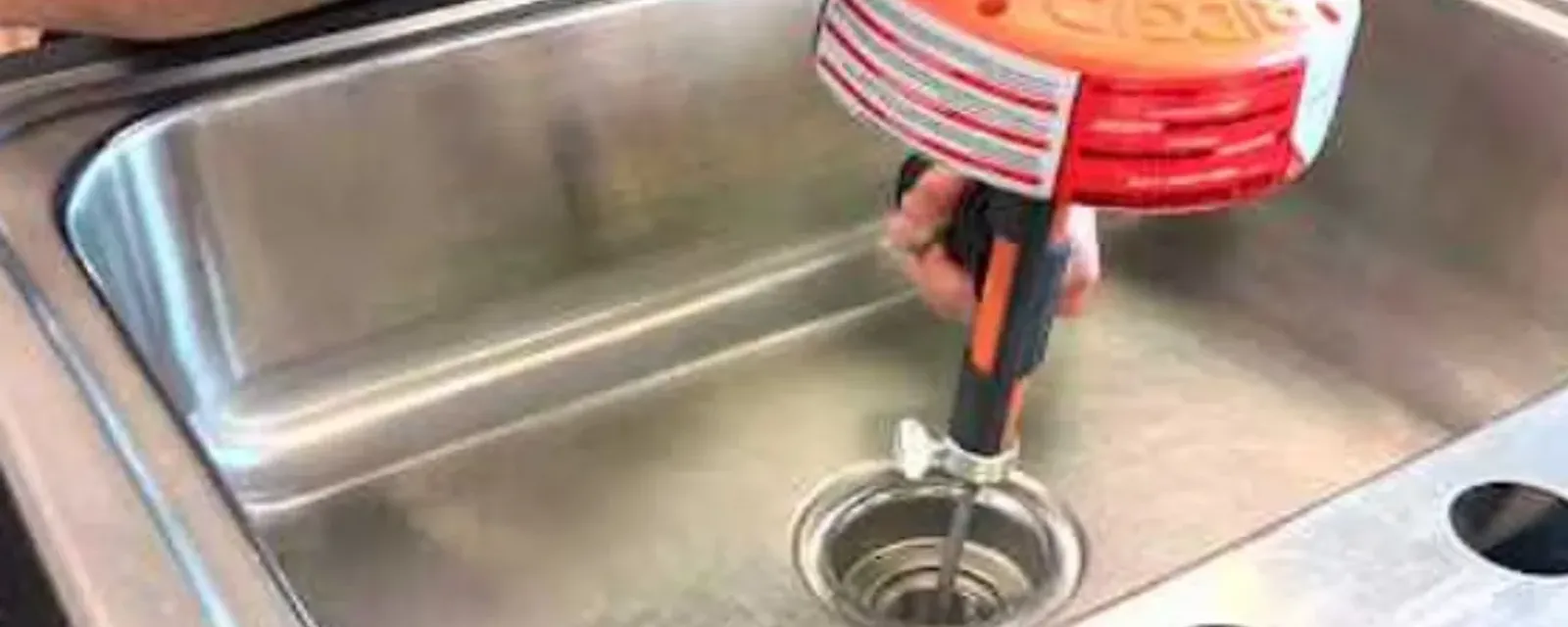
- Use a small hand auger for a tub or sink drain, feeding the cable gently and rotating it as it meets the clog.
- If water backs up in more than one fixture, stop. That points to a line farther down, and a cable machine or camera is the right next step.
These steps cost nothing but time and they solve most single-fixture clogs. When they do not, see how we approach drain cleaning in Cheltenham, including cable work and camera checks.
Clog type guide: what you are probably dealing with
| Where | Likely cause | Bleach helps? | Better first move |
|---|---|---|---|
| Bathroom sink, slow | Hair and soap scum in the stopper area or trap | No | Pull the stopper and clean it, then clear the P-trap |
| Tub or shower, standing water | Hair wrapped around the drain crossbar | No | Remove the strainer and use a hand auger |
| Kitchen sink, slow or stinky | Grease and food in the trap and branch line | No | Hot water and dish soap, trap cleaning, then an auger |
| Toilet, rises then drains slowly | Partial blockage in the trap or a flange issue | No | Plunge with a flange plunger, then call if it repeats |
| Multiple fixtures gurgle | Main line restriction | No | Stop using water and call for a cable machine and camera |
When the clog is bigger than a hairball
A kitchen line that keeps clogging every few weeks has usually built a layer of grease and scale on the pipe wall, and a cable alone punches a hole through it. Hydro jetting in Cheltenham uses high-pressure water to scour the full pipe circumference, which is why it keeps a line clear longer than a cable does.
Floor drains and basement lines tell a similar story. If the lowest drain in the house smells or gurgles during a storm, the question is not what to pour down it. The question is what the main line is doing.
Cheltenham local note: sewer ownership and laterals
Most Cheltenham homes drain into the township's sanitary sewer, which Aqua Pennsylvania now owns and operates. Aqua's 2018 announcement described about 10,500 sewer connections in Montgomery County for the system. If your property is on a septic tank instead, call a septic specialist before using any chemicals, because bleach can disturb the bacteria a tank depends on.
The private pipe from your house to the public main is called the lateral, and Cheltenham Township Code Chapter 238, section 238-14.2, deals with it.
If roots block a lateral, the owner must have it cleaned within 30 days of township notice, with 48 hours' notice to the township before work begins, and cleaning proceeds from the building toward the main. Contractors rodding or clearing a building sewer notify the township within 48 hours of starting, preferably before.
What that means for you: a repeated main-line clog is not something to treat with chemicals. It often means roots or a damaged lateral, and a camera inspection tells you which. The township also prohibits letting extra water such as downspouts or hoses enter the lateral, and owners must correct a violation within 60 days of notice.
Our Jenkintown page covers a neighboring borough that owns its own sewer system, and our Glenside page explains how service differs across the Abington line.
Safer habits that prevent clogs
- Install a fine mesh strainer in tubs and showers and empty it into the trash.
- Wipe greasy pans with a paper towel before washing, and never pour cooking fat down the drain.
- Run hot tap water for a minute after washing dishes to move residue through the trap.
- Keep flushable wipes out of toilets even when the package says flushable.
- Once or twice a year, remove and clean kitchen and bathroom traps.
Frequently asked questions
You can, but it will rarely clear the clog and it is dangerous if another cleaner is present. Mechanical clearing with a plunger, trap cleaning, or an auger is the safer first step.
No. Many openers contain acids or ammonia, and mixing them with bleach can release toxic gas. Use one product at most, ventilate, and never combine them.
It may cover the odor for a short time. A lasting smell usually comes from a dry trap, biofilm in the pipe, or a leak, which are better solved by cleaning the trap, running water, or camera inspection.
Repeated strong chemical use can wear on older metal and on some seals and gaskets. It is another reason to avoid it as a drain cleaner.
Do not use bleach or chemical openers without asking a septic professional, since heavy chemicals can harm the tank bacteria.
The code treats the lateral as the property owner's pipe. Chapter 238 says owners must have root-blocked laterals cleaned within 30 days of township notice, so a recurring main-line clog is worth a camera check.
Yes. Dispatch is open 24/7. A sewage backup or flooding fixture is treated as urgent, and you can call (215) 714-6692 at any hour.
Plumbing emergency in Cheltenham?
Call (215) 714-6692 now. A live dispatcher answers 24 hours a day.